More About This Card
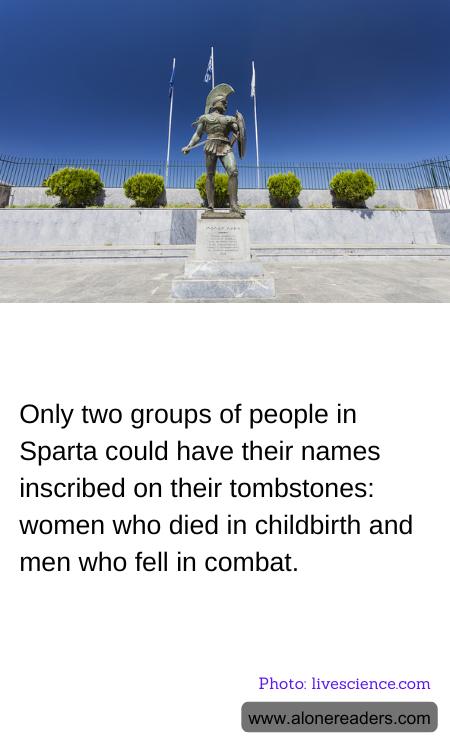
In ancient Sparta, a city-state renowned for its militaristic and disciplined culture, the honor of individual commemoration in death was reserved only for those who died under specific, valorous circumstances. This reflects the Spartan value system which placed immense importance on service and sacrifice for the state. The only Spartans granted the honor of having their names inscribed on their tombstones were women who died in childbirth and men who fell in combat. This practice highlights the roles that were most valued in Spartan society: warriors on the battlefield and mothers in the home.
Men who died in combat were celebrated because they fulfilled their primary role as defenders of the state. Dying in battle was considered the highest honor, aligning perfectly with the Spartan ideal of dying for one's country as the ultimate display of loyalty, bravery, and honor. These fallen warriors were often revered as heroes, their names eternally marked in stone as symbols of valor and sacrifice.
Similarly, Spartan women who died in childbirth were held in high regard, as they were seen as giving their lives in the service of perpetuating the Spartan citizenry. In a society where the strength of the collective was valued above individuality, these women contributed by bearing future warriors and caretakers of Sparta. Their death during childbirth was viewed as a sacrifice for the greater good of the state, paralleling the soldiers' sacrifice on the field.
This practice of selective commemoration served several purposes. Primarily, it reinforced the societal norms and expectations placed upon Spartan men and women, encouraging the living to aspire to these ideals. It also underscored the importance of service to the community and upheld the communal ethos that was central to Spartan identity. Furthermore, by memorializing only those who died under such circumstances, Spartans maintained a focus on communal utility and virtue over personal legacy.
In essence, this custom provided a clear message about the values that governed Spartan life and offered a form of immortality for those who died fulfilling these revered roles. While modern perspectives might view this as a harsh measure of one’s life significance, for Spartans, it was an integral part of maintaining the social fabric of their robust but rigid society.