More About This Card
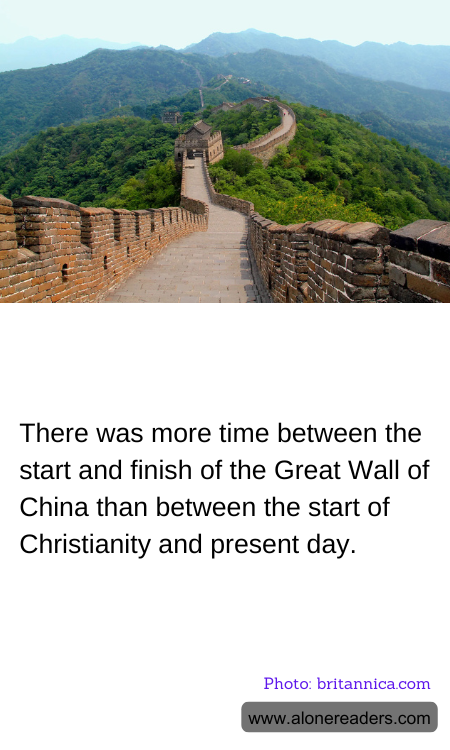
The Great Wall of China is one of the world's most enduring marvels, stretching approximately 13,170 miles across northern China. Originally conceived by Emperor Qin Shi Huang in the third century BCE, the wall was built to protect the nascent Qin dynasty against raids by nomadic groups of the Eurasian Steppe. The construction of the wall was a colossal undertaking that spanned several dynasties, evolving from a series of earthen defenses into a vast complex of walls and fortifications made of bricks and stone.
The most intensive construction occurred during the Ming dynasty, beginning in the 14th century and lasting until the 17th century. This period accounts for much of the structure that we recognize today as the Great Wall. The timeline of the Great Wall's construction spans over 2,000 years when including its earliest forms, stretching its history over a vast expanse of time that indeed exceeds the age of Christianity.
Christianity, on the other hand, began in the first century CE with the life and teachings of Jesus Christ in the Roman province of Judea. By most accounts, the formal spread of Christianity is marked by the Great Commission, an event dated to around 33 AD after Jesus’ crucifixion and subsequent resurrection. The religion experienced significant growth throughout the Roman Empire and beyond, becoming a dominant force in the religious landscape of the Medieval and modern worlds.
Comparatively, the timeline from the start of Christianity to present day spans approximately two thousand years. This indeed is shorter than the duration from the beginning of construction on the earliest sections of the Great Wall to the completion of the Ming dynasty's contributions. The difference highlights not only the vast time scale over which the Great Wall was constructed but also the enduring nature of both the physical structure itself and the cultural significance it holds as a symbol of Chinese ingenuity and determination.
The contrasts and comparisons between these two enduring legacies—the Great Wall of China and Christianity—offer a profound perspective on human history's vast and varied tapestry. Each represents monumental human efforts that have left indelible marks on humanity's story, shaped civilizations, and continue to draw interest and reverence well into the modern era.