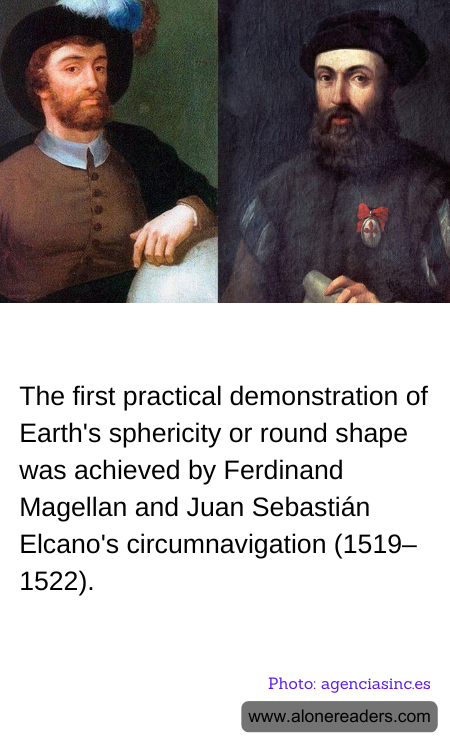
The notion that Earth is spherical was demonstrated spectacularly by the expedition initially led by Ferdinand Magellan and subsequently completed by Juan Sebastián Elcano. Setting sail in 1519, this historic voyage marked the first successful circumnavigation of the globe, conclusively proving the Earth's roundness—a theory long speculated by astronomers and philosophers but never before conclusively demonstrated via exploration. Magellan, a Portuguese explorer serving the Spanish crown, embarked with a fleet known as the Armada de Molucca, consisting of five ships and around 270 men, aiming to find a western sea route to the Spice Islands.
The expedition faced myriad challenges, from treacherous waters and hostile encounters with indigenous peoples to scurvy and starvation. Magellan himself did not complete the journey; he was killed in the Battle of Mactan in the Philippines in 1521. However, under the leadership of Spanish navigator Juan Sebastián Elcano, the voyage continued. With dwindling resources and only one ship remaining, the Victoria, Elcano and the remaining crew members pressed westward back to Spain.
Elcano’s successful return to Spain in 1522, almost three years after their initial departure, was a monumental event in the history of exploration. It irrevocably altered European perspectives on geography and global trade and provided empirical evidence that the Earth was indeed round, as they had sailed around it, returning to their point of origin from the opposite direction. This circumnavigation provided practical reinforcement to the conceptual framework developed by astronomers like Ptolemy and later refined during the Renaissance, bridging ancient speculative science with tangible experience and observation.
The implications of Elcano’s completion of Magellan’s expedition extended beyond mere geography. It set the stage for an era of global exploration and colonization that would reshape the world’s political and economic landscape. It challenged and inspired European powers to embark on their own voyages of discovery, leading to advances in navigation technology and maritime science that facilitated the Age of Exploration. Reflecting on this voyage provides not just an understanding of Earth’s shape but also insight into human tenacity and curiosity, driving explorers to undertake perilous journeys into the unknown.
