More About This Card
In India, the cow has been venerated as a sacred animal since around the 4th century BCE, marking a significant shift in cultural and religious practices. This transformation can be largely attributed to the evolving doctrines within Hinduism, where the cow's symbolism was increasingly integrated into religious rituals and daily practices. Hindu scriptures, including the Vedas and Upanishads, which were composed during this period, often refer to the cow as a symbol of non-violence, wealth, and motherly nature.
The elevation of the cow to a sacred status is intertwined with the principle of ahimsa, or non-violence, championed by religious and philosophical leaders such as Mahavira, the founder of Jainism, and later reinforced by Buddhist traditions. These religions, which emphasize respect for all living beings, significantly influenced Hindu thought and practices. As the concept of ahimsa took deeper root in Indian society, the cow came to be seen not just as an agricultural commodity but as a spiritual entity deserving respect and protection.
The reasons for the cow’s sacred status are manifold. Cows have been essential to agrarian economies for centuries, providing milk, butter, and other dairy products, alongside their uses in tilling fields. The utility of cows, combined with the religious ethos of non-violence, fostered a cultural milieu where it became taboo to kill cows for food. Over centuries, this taboo was codified into law in many parts of India, further reinforcing the cow’s sacred status.
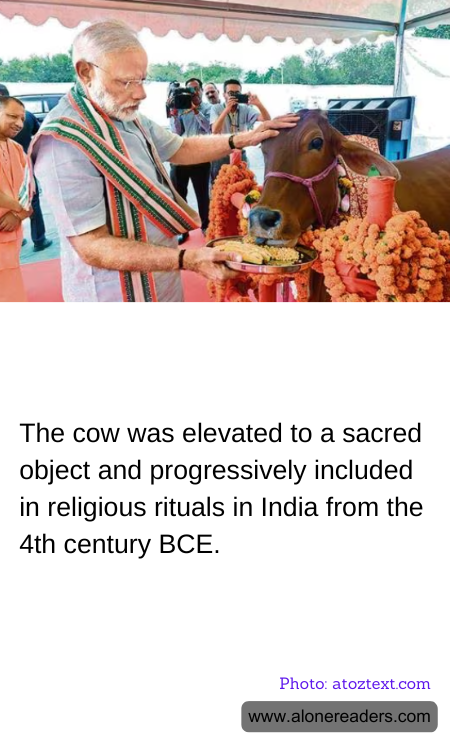
During religious ceremonies and festivals, cows are often adorned and worshipped. Diwali, for example, includes a day dedicated to the celebration of the bond between humans and cattle, known as Govatsa Dwadashi or Vasu Baras. The role of the cow in these festivities is not mere tradition but a reflection of the deep-rooted spiritual and cultural significance of cows in Indian society.
Today, the reverence for cows can be seen in various aspects of Indian life, where they often roam freely and are cared for by communities. However, the cow's sacred status also intersects with contemporary legal and social issues, reflecting ongoing debates about religious practices, animal rights, and communal relationships in India’s pluralistic society. The cow thus remains a potent symbol, embedded in the religious and cultural tapestry of India, influencing practices and policies alike.