More About This Card
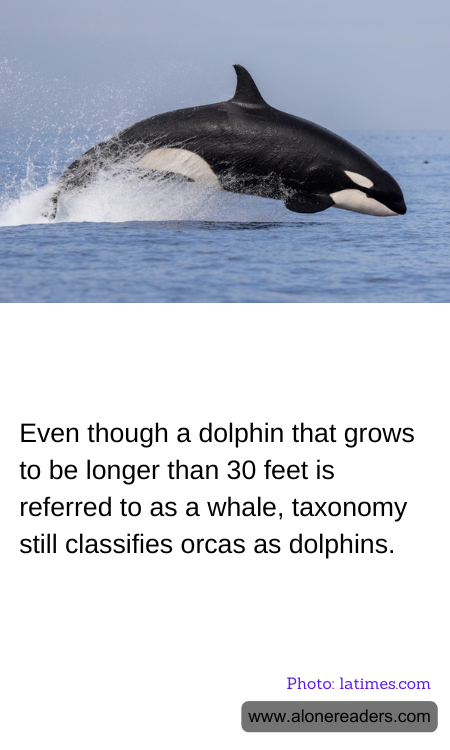
Orcas, commonly known as killer whales, are indeed one of the ocean's most formidable predators, but despite their common name, they are not whales in the true sense of the word. These majestic creatures, which can grow to be longer than 30 feet, are actually the largest members of the dolphin family, the Delphinidae. This might seem counterintuitive especially given their size and predatory nature, but taxonomy – the science that encompasses the description, identification, nomenclature, and classification of organisms – places them firmly within the dolphin category.
Historically, the term "whale" was used more loosely to describe any large marine mammal. What distinguishes orcas genetically from whales is their distinct characteristics and behaviors that align closely with dolphins. This includes their social structure, high intelligence, and their echolocation abilities – traits they share with other dolphins, but not with whales. Orcas exhibit complex social behaviors and live in closely-knit, matriarchal pods that consist of family members spanning multiple generations.
The confusion often arises from the common names assigned to marine species. While orcas are called "killer whales," their classification is more accurately reflected in their scientific name, Orcinus orca, which ties them to the oceanic dolphin family. It is notable how common names and scientific classifications sometimes diverge based on historical and observational precedences.
The impressive size and prowess of orcas undoubtedly make them one of the ocean’s most captivating creatures. They are apex predators, meaning they reside at the top of the food chain and have no natural predators. Their diet is extensive and varies by region and specific pod preferences, including fish, seals, and even large whales. Despite their fierce reputation, orcas are sophisticated and intelligent animals that have captivated marine researchers and ocean enthusiasts alike.
Understanding the correct classification of orcas as dolphins enriches our knowledge of these complex creatures and highlights the diversity and intricacy of marine life. It also underscores the importance of precise scientific terminology in aiding our understanding and conservation efforts for these extraordinary animals.