More About This Card
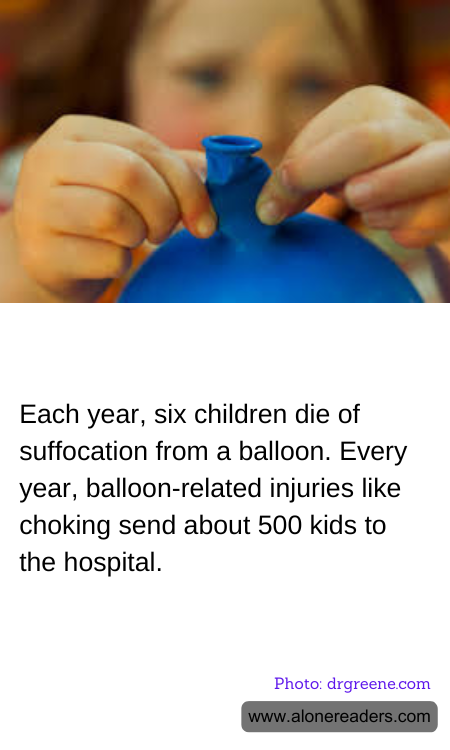
In recent years, the hazards associated with seemingly innocent party accessories like balloons have come under scrutiny due to the surprising and troubling statistics related to child injury and fatalities. Balloons, largely considered symbols of festivity and fun, pose a hidden but real danger, particularly to young children. Each year, approximately six fatalities are reported due to suffocation from balloons. This type of accident typically occurs when balloons burst and the fragments are inadvertently inhaled, causing airways to block and leading to suffocation.
The risks extend beyond just fatal incidents. Around 500 children annually find themselves in emergency rooms due to injuries related to choking on balloons. These incidents frequently happen when children, especially those under the age of eight, try to inflate or chew on balloons and accidentally inhale pieces that they cannot expel. This is particularly dangerous because a balloon's elasticity allows it to conform to the throat's contours, effectively sealing off the airway and making it extremely difficult to dislodge without medical intervention.
The alarming number of balloon-related injuries has sparked debates about the safety of balloons in environments frequented by children. Many experts and child safety organizations advocate for increased awareness among parents, caregivers, and event organizers about the potential dangers of balloons. They recommend supervision of children while playing with balloons and advise against giving balloons to children under the age of three.
Preventative tips include using Mylar balloons instead of latex ones, as they are less likely to burst into dangerous fragments, though they come with their own set of risks, such as conducting electricity if tangled in power lines. Furthermore, ensuring that any broken balloon pieces are immediately discarded is crucial to prevent children from picking them up and putting them in their mouths. Educational campaigns also stress the importance of teaching children not to put non-food items like balloons in their mouths and the necessity of adult supervision during parties or events where balloons are used.
The statistics surrounding balloon-related incidents serve as a stark reminder of the importance of vigilance and preventive measures to safeguard children from seemingly innocuous dangers. Through education and appropriate preventive actions, the number of tragic incidents involving balloons can be reduced, allowing children to safely enjoy the joy and color they bring to celebrations.