More About This Card
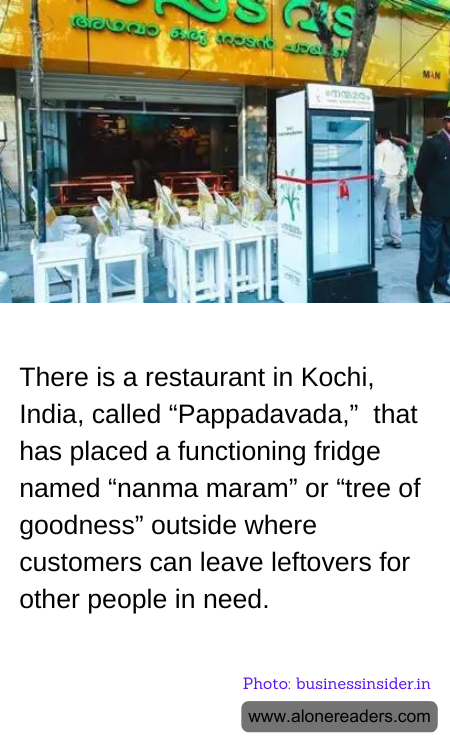
In Kochi, India, the innovative concept of sharing and caring has come to life through a unique initiative by a local restaurant named Pappadavada. The owner, Minu Pauline, introduced a public refrigerator dubbed “nanma maram” or “tree of goodness” to address the dual issues of hunger and food waste. This fridge, stationed outside the restaurant, invites customers and residents to leave their uneaten or excess food, which then becomes available to the homeless and needy at no cost.
The concept emerged from Pauline’s observation of the significant amount of perfectly edible food that goes to waste while there are many who struggle to find a single meal. The “tree of goodness” serves as a bridge, connecting those with surplus to those in need. People from all walks of life—including restaurant patrons, local residents, and even businesses—can contribute to the fridge. The food left here is quickly utilized, with no need for anyone to feel embarrassed about taking help.
The community fridge not only helps in feeding those in need but also fosters a spirit of sharing and community engagement. It encourages people to think actively about food wastage and promotes a culture of reuse and sustainability. The initiative has been well received by the community and has inspired similar actions in other parts of the country.
Such programs underline the power and impact of grassroots initiatives in tackling broader social issues like hunger and waste management. The “nanma maram” not only feeds the hungry but also plants seeds of compassion and caring in the community, truly living up to its name as a tree of goodness.