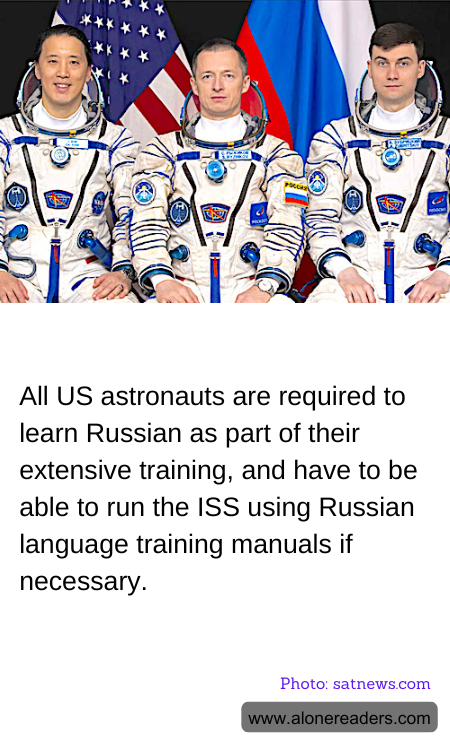
In the realm of international space exploration, communication is not just vital; it is a lifeline. One might not immediately connect language learning with astronaut training, but for U.S. astronauts, mastering Russian is as crucial as understanding astrophysics or navigating spacecraft. This linguistic requirement stems from a longstanding collaboration between the United States and Russia, especially within the framework of the International Space Station (ISS) operations.
The ISS is a model of international cooperation, involving five participating space agencies: NASA (United States), Roscosmos (Russia), JAXA (Japan), ESA (Europe), and CSA (Canada). Since the retirement of the Space Shuttle in 2011, Russian Soyuz spacecraft have been the only means for astronauts of all nationalities to reach the ISS. This makes Russian an essential tool for communication. The bilingual nature of operations aboard the ISS requires all astronauts to have a working proficiency in Russian. This ensures that they can communicate effectively with Russian crew members and control centers, manage emergency situations, and operate Russian modules and equipment.
The training is comprehensive; astronauts spend hundreds of hours learning Russian, focusing on both technical language and everyday communication. The goal is to reach a level where they can operate the ISS using Russian-manuals if necessary—a critical skill, especially during joint missions where collaboration and mutual understanding are key to success.
Moreover, learning Russian helps in building camaraderie and trust among international crew members, fostering a cooperative environment. It goes beyond mere operational needs, promoting cultural exchange and mutual respect, elements that are as fundamental in space as they are on Earth.
Therefore, the requirement for U.S. astronauts to learn Russian underscores not only the practical aspects of current space missions but also the broader ethos of international collaboration. The ability to speak Russian thus becomes not just a technical skill but a bridge between worlds, crucial for the success of present and future multinational space endeavors.
