More About This Card
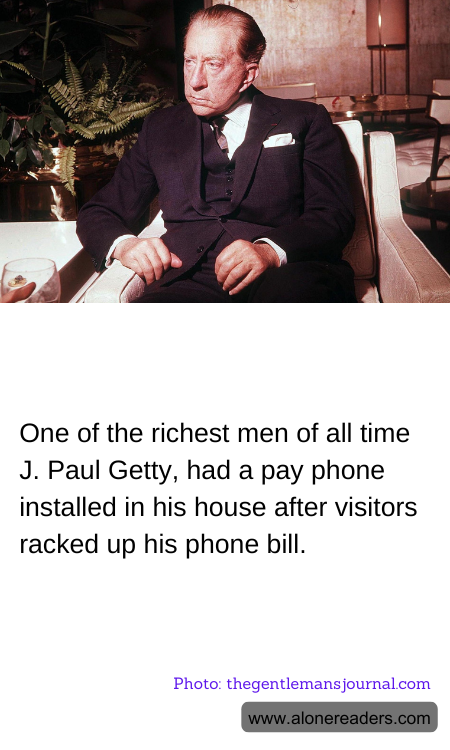
J. Paul Getty, known as one of the wealthiest individuals in history, famously installed a pay phone in his mansion, Sutton Place in Surrey, England, to address an unusual problem. Despite his vast fortune, Getty was noted for his frugality, a characteristic that often seemed at odds with his luxurious lifestyle. His decision to install a payphone stemmed from his frustration over guests using his personal telephone line excessively, thereby significantly increasing his phone bills. This move was widely reported in the media and contributed to his reputation as a penny-pincher.
This anecdote is particularly illustrative of Getty's approach to wealth and expenses. He was a firm believer in personal responsibility and expected his guests to bear the cost of their own phone calls. His actions reflect a broader philosophy that even the wealthiest should pay attention to small expenditures. Getty's frugality was not limited to the installation of a payphone; he was known to monitor other minor expenses closely, a habit that might seem contradictory given his lavish acquisitions, such as art and real estate.
The payphone incident provides a glimpse into the complexities of wealth management and personal habits. It underscores how Getty’s financial prudence was integral to his ability to amass and maintain his fortune. His life is a study in contrasts, balancing extraordinary luxury with simple, everyday thriftiness. This peculiar blend of traits offers a lesson in the importance of financial management, regardless of one’s economic status. Despite the criticism he faced for such decisions, Getty’s legacy also includes his substantial contributions to the arts and sciences, funded by the fortune he so carefully guarded.