More About This Card
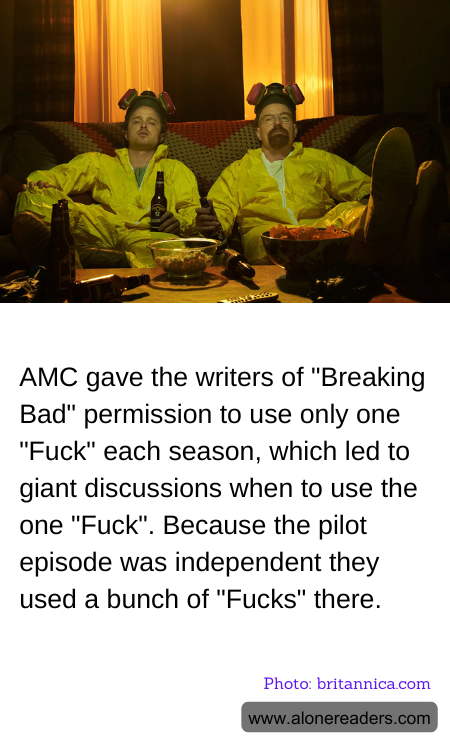
In the television landscape, censorship and content guidelines often dictate how creators express their narratives. An intriguing example of this dynamic played out in the critically acclaimed TV series "Breaking Dead," where AMC imposed a peculiar restriction: the writers were allowed only one use of the word "Fuck" per season. This limitation created a unique challenge for the show’s creators, transforming what could have been a straightforward scriptwriting process into a strategic deliberation.
The reason behind such restrictions typically stems from network concerns about ratings and adherence to broadcasting standards, which in turn influence viewer demographics and advertising. Words deemed as profanity can impact a show’s rating, potentially limiting its accessibility to broader audiences. Therefore, networks like AMC implement these rules to maintain a balance between creative freedom and marketability.
The writers of "Breaking Bad" approached this challenge with a blend of creativity and precision. Knowing they had only one opportunity per season to use the expletive added weight to the chosen moment, making it profoundly impactful. Each season, discussions about when and where to use their allotted "Fuck" involved considerable thought, ensuring that it would enhance the narrative impact rather than merely serving as a gratuitous profanity.
Interestingly, the pilot episode, being produced independently before these restrictions fully took hold, made liberal use of the word. This initial freedom contrasted sharply with the subsequent seasons' constraint, highlighting how creative processes can evolve and adapt based on the broadcasting framework. Moreover, this single-per-season rule for "Breaking Bad" not only illustrates the challenges faced by television writers in navigating censorship rules but also underscores the power of a single word to convey emotion, release tension, or underscore a moment’s gravity within a tightly controlled creative space.
Such constraints, though seemingly limiting, can paradoxically enhance creativity as writers look for other expressive tools to communicate their vision. The case of "Breaking Bad" is a testament to how limitations can spur innovation, making the show not just a success in terms of its storytelling and acting, but also as a study in the art of scriptwriting under restrictions. Through careful planning and creative wordplay, the series managed to deliver a potent narrative punch, proving that sometimes, less is indeed more.