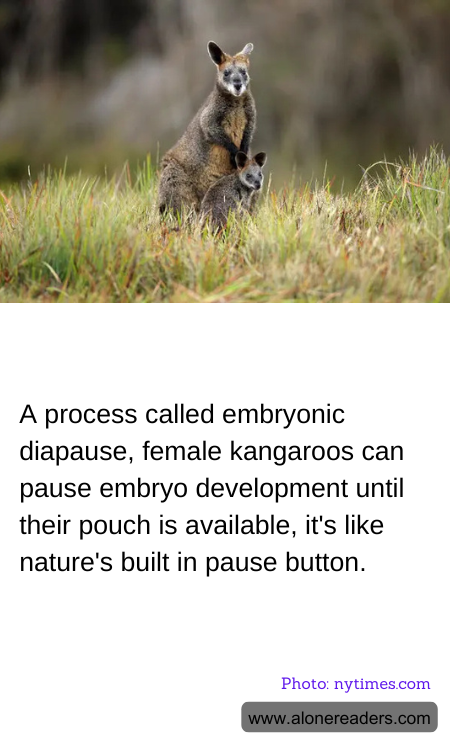
Embryonic diapause is a fascinating reproductive strategy employed by several mammals, including some marsupials like kangaroos. This process allows a female kangaroo to suspend the development of her embryo until conditions are optimal for its survival and growth. Essentially, it’s nature’s way of installing a pause button on pregnancy, ensuring that the offspring has the best chance of thriving once born.
In kangaroos, this phenomenon is especially critical due to their unique reproductive system. A female kangaroo has the ability to mate and conceive shortly after giving birth to a previous joey. However, if the previous joey is still in the pouch and not independent enough to leave, the mother kangaroo can delay the development of the new embryo. This delay can last for several weeks to months, depending on environmental conditions and the status of the older joey.
The mechanism behind embryonic diapause involves hormonal signals that maintain the embryo in a state of arrested development until the older joey vacates the pouch. When the pouch becomes available, hormonal changes trigger the resumption of the embryo's growth, leading to its development and eventual birth. This strategic pause ensures that the mother does not have to care for more offspring than she can sustainably support at one time, which is particularly important in the often harsh and fluctuating environments where kangaroos live.
Moreover, embryonic diapause is not exclusive to kangaroos but is also seen in other marsupials and in some placental mammals, including certain species of rodents and mustelids (like weasels and badgers). Each species has adapted this reproductive strategy in ways that suit its environmental and ecological needs, showcasing the incredible versatility and evolutionary advantage of this biological pause.
The ability to pause pregnancy until conditions are favorable reflects a remarkable adaptation to environmental variability and resource scarcity. It helps in population management and the survival of species by aligning birth times with favorable conditions such as ample food supply. In understanding mechanisms like embryonic diapause, scientists gain insights not only into the fascinating world of animal biology but also into potential applications in conservation and management of species facing environmental challenges.
