More About This Card
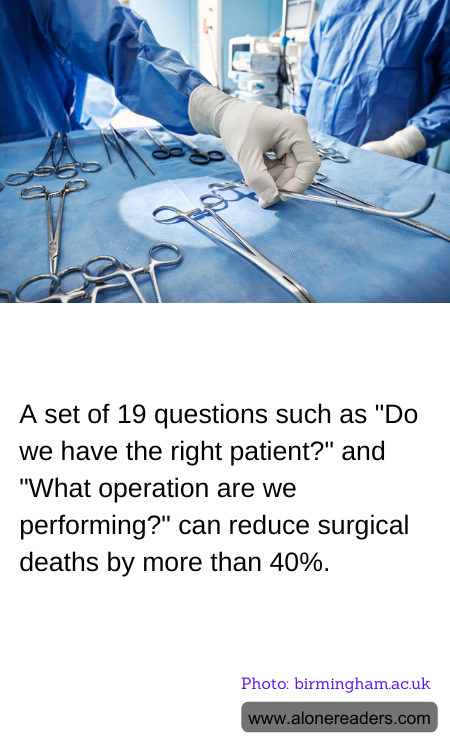
In the complex environment of surgical healthcare, clear communication and strict adherence to protocols are crucial for patient safety. The implementation of a standardized checklist of questions before surgery is a strategic move aimed at enhancing the surgical team's focus and coherence. The checklist, which includes straightforward yet essential questions like "Do we have the right patient?" and "What operation are we performing?", serves as a final review to ensure that all critical information has been accurately communicated and understood by every member of the surgical team.
The adoption of such pre-operative safety checks has been shown to significantly reduce surgical deaths—by more than 40%, according to studies. This impressive reduction is attributed to multiple factors. First, the checklist minimizes the risk of human error, which is a leading cause of medical complications and fatalities. Second, it fosters a culture of teamwork and accountability, where every team member is empowered to confirm that safety protocols are followed. Third, it facilitates a more disciplined and standardized approach to patient care, which helps avoid common pitfalls like wrong-site surgery or incorrect patient procedures.
In essence, the checklist acts as a safety net that catches potential threats to patient safety before they can cause harm. It revolutionizes the procedural norms of surgical teams, placing a higher emphasis on cross-checks and verification at every stage of patient handling. Hospitals and medical institutions worldwide have recognized the benefits of integrating these questions into their surgical procedures, leading to a broader movement towards improved patient outcomes and higher standards of care in surgical practices. This simple yet effective checklist represents a critical step forward in the journey towards eliminating preventable surgical errors and enhancing the overall quality of healthcare.