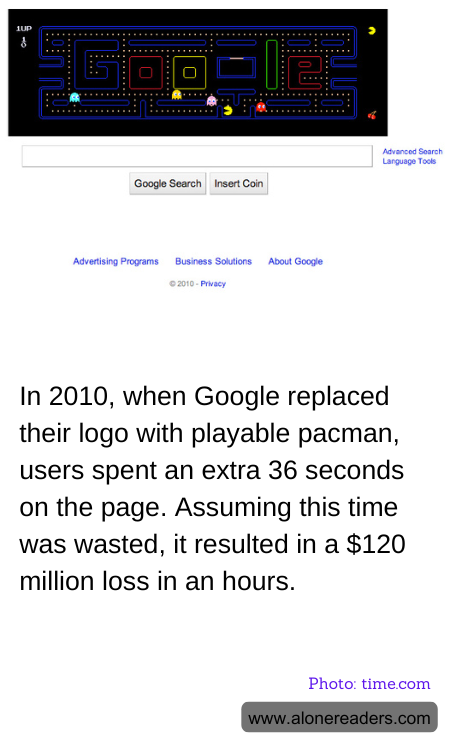
In May 2010, to celebrate the 30th anniversary of the iconic arcade game Pac-Man, Google transformed its usual static logo into an interactive Pac-Man game directly on the search homepage. This playful modification allowed users to play a full-fledged version of Pac-Man by simply visiting Google's homepage, engaging with the colorful, chasing game instead of conducting their usual searches or moving on to other digital tasks.
The introduction of this interactive logo led to an unexpected surge in time spent on Google's main page. According to analysts, users around the world ended up spending an additional 36 seconds on average on the homepage due to the game. While this might seem insignificant at an individual level, given Google’s vast user base, this additional time accumulated rapidly.
The financial implications of this increased engagement were significant. Assuming the additional 36 seconds were unproductive, Tony Wright from RescueTime—a company specializing in time management software—estimated a potential loss of about $120 million in productivity. This figure was grounded on the assumption that Google has about 504 million users, each spending these additional seconds on the game. The hourly wage (averaged and adjusted globally) considered was about $25 per hour, suggesting a significant economic impact due to the little yellow character munching dots and evading ghosts across computer screens worldwide.
While some might view these figures as an illustration of loss in productivity and a costly distraction, others argue the innovation and joy sparked by this interactive doodle brought a different kind of value. It showcased Google's ability to merge nostalgia with modern web technology, creating a shared cultural moment that millions could enjoy. This playful engagement might even have reinforced user loyalty and enhanced Google's brand appeal. In terms of creativity and marketing brilliance, Google’s interactive Pac-Man doodle was nothing short of a masterstroke, even if it did come with a hefty theoretical price tag. This event remains a compelling example of the ever-blurring lines between digital interaction, entertainment, and productivity, highlighting how seemingly small digital experiences can have wide-reaching effects.
