More About This Card
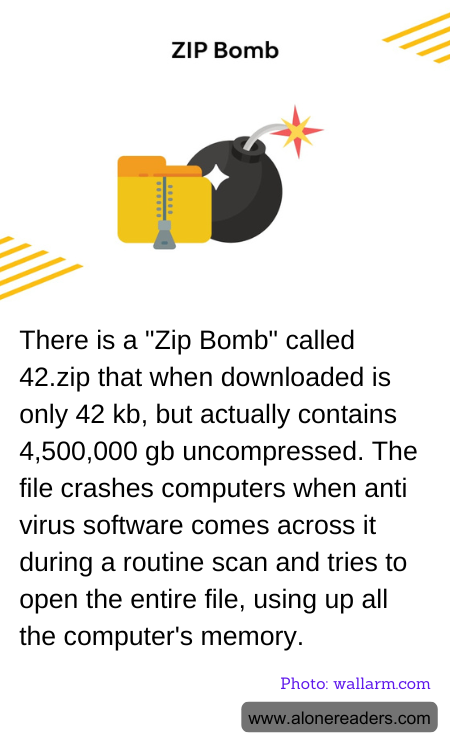
A "Zip Bomb," also known as a "Zip of Death," is a malicious archive file designed to crash or render useless the program or system reading it. One of the most infamous examples of a zip bomb is "42.zip." This file is remarkably small when downloaded, occupying just 42 kilobytes on disk. However, its real impact is felt when an attempt is made to decompress it. Once expanded, it unleashes a staggering 4.5 petabytes (or 4,500,000 gigabytes) of data. The mechanics of a zip bomb involve leveraging the file compression algorithm to an extreme degree. The file contains layers of nested archives that each expand exponentially, ultimately flooding the system's memory.
Zip bombs exploit the functionality of antivirus software, which typically scans the contents of a file by decompressing it first. When antivirus software encounters a zip bomb like 42.zip, it attempts to open the file for inspection, which triggers the decompression process. As the nested files expand, they consume all available system memory and processing power, leading to system slowdowns or crashes. This can also hinder the system’s ability to perform basic tasks and respond to user commands, effectively constituting a denial-of-service attack.
The dangers posed by zip bombs make them a potent tool for cyber attackers wanting to bypass security measures. It underscores the importance for individuals and organizations to implement robust security protocols that can preemptively identify and neutralize such threats before they activate. More advanced antivirus programs now include protections specifically designed to detect and block the effects of zip bombs without engaging in the risky process of file decompression.
Though intriguing from a technical standpoint, zip bombs like 42.zip serve as stark reminders of the ongoing arms race in cybersecurity, illustrating the need for continual vigilance and innovation in the face of evolving digital threats.