More About This Card
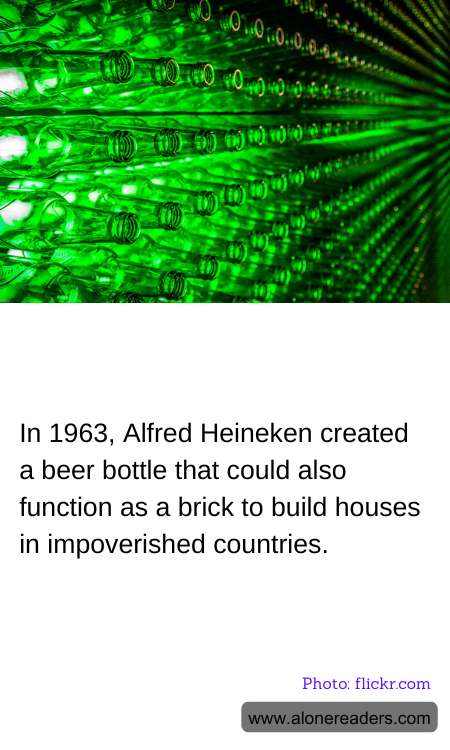
In 1963, Alfred Heineken, the Dutch brewing magnate, unveiled a novel concept aimed at addressing both environmental concerns and the need for affordable building materials in impoverished regions. He introduced the Heineken WOBO (World Bottle), an innovative design where beer bottles could double as bricks for building houses. This idea was borne out of Heineken's observation of litter problems during a vacation in Curaçao, where discarded bottles littered the beaches. Moved by this sight and the concurrent issue of inadequate housing in many parts of the world, Heineken enlisted the help of architect John Habraken to design a bottle that could serve a dual purpose.
The result was the WOBO, a rectangular, interlocking beer bottle made of glass with flat sides and other modifications that allowed them to be stacked like bricks. Each bottle had a 350ml and a 500ml variant, designed to be sturdy enough to be used in construction once emptied. The vision was progressive: the bottles would reduce waste by serving a secondary, useful purpose after fulfilling their primary role of containing beer.
Despite the innovative approach, the concept faced multiple challenges. Logistically, producing and distributing a glass bottle sturdy enough to be used as a building material proved complex and costly. Moreover, there was tepid interest and acceptance from the targeted communities, many of which were either unfamiliar with or skeptical about unconventional building materials. From a cultural and practical standpoint, the adoption of the WOBO required a significant shift in perception and behavior, a hurdle that was difficult to overcome at the time.
Only two prototype buildings were ever constructed using the WOBO bottles before the project was shelifted. Approximately 100,000 bottles were produced, most of which were never used as intended. Nonetheless, the Heineken WOBO remains a fascinating example of innovative, eco-friendly design ahead of its time. It underscores the potential of creative thinking in addressing environmental sustainability and offers a unique lens on the challenges of implementing novel sustainability ideas in practical, impactful ways.