More About This Card
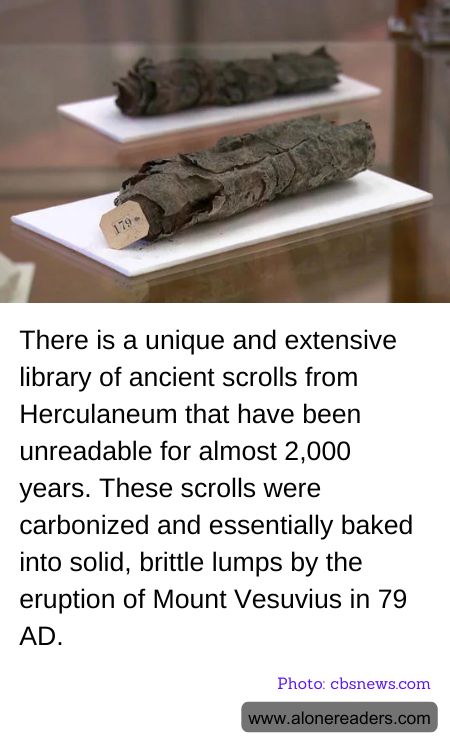
In the ancient town of Herculaneum, near the base of Mount Vesuvius, an extraordinary collection of scrolls has been hidden from scholarly view for centuries. This collection, known as the Herculaneum papyri, consists of hundreds of carbonized scrolls that were entombed by the catastrophic eruption in 79 AD which famously destroyed Pompeii and Herculaneum. Unlike Pompeii, where volcanic ash preserved the city in remarkable detail, the intense heat and subsequent flow of material in Herculaneum effectively baked these scrolls, turning them into fragile, blackened lumps that have tantalized and frustrated historians and scholars for years.
The significance of these scrolls cannot be overstated. They were found in the Villa of the Papyri, a luxurious house that is believed to have belonged to the father-in-law of Julius Caesar, Lucius Calpurnius Piso Caesoninus. This villa housed a library full of papyrus scrolls which included works of philosophy, particularly the Epicurean philosophy, making this collection a unique treasure trove of antiquity. It is the only library that has survived from the classical world in its entirety, and the potential insights into ancient thought, literature, and daily life are immense.
The challenge of reading these scrolls is due to their fragility and the risk of destruction during any attempt to unfurl them. Traditional methods proved too invasive, often leading to the complete disintegration of the scrolls. However, recent technological advancements have opened up new possibilities for uncovering the secrets held by these ancient texts. Techniques such as X-ray phase-contrast imaging and virtual unrolling methods developed in the 21st century have begun to allow researchers a glimpse into the content without physically opening the scrolls. These sophisticated imaging techniques can differentiate between the ink and the carbonized papyrus, enabling the faint writing to be read and translated, at least in part.
Despite these advancements, progress is slow, and much work remains to be done to fully decipher the texts. Each scroll offers a complex puzzle, often compounded by the scrolls' tendency to shatter into fragments with any handling. Moreover, the texts are written in Greek, a layer of complexity added for translators and historians alike who are working to interpret these ancient words accurately.
The endeavor to read the Herculaneum scrolls is a poignant reminder of the fragility of cultural heritage and the enduring human quest for knowledge. As more scrolls are painstakingly read and interpreted, it is hoped that they will shed new light on the classical world, providing fresh perspectives on the literature, philosophy, and artistic expression of the time. This peek into ancient intellectual life not only enriches our understanding of history but also connects us to the past in a deeply profound way, bridging millennia through the timeless act of reading and scholarship.