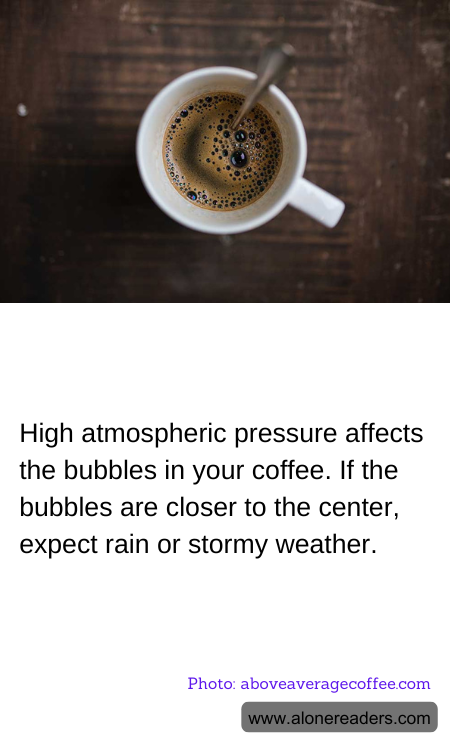
The morning ritual of brewing a fresh cup of coffee is a cherished moment for many, offering a comforting start to the day. Yet, beyond its rich aroma and invigorating taste, your coffee might also serve as an unexpected weather forecaster. This intriguing phenomenon hinges on the behavior of bubbles that form on the surface of your coffee, influenced by atmospheric pressure.
When you pour a fresh cup of coffee, bubbles often form due to the release of carbon dioxide trapped in the coffee grounds during brewing. These bubbles, while seemingly insignificant, can actually provide clues about the weather. The key lies in their position on the surface of the coffee. If you observe that the bubbles are clustering towards the center of the cup, it might be time to grab an umbrella, as this is often an indicator of impending rain or stormy weather.
The science behind this lies in atmospheric pressure, which is the force exerted by the weight of the air above us. High atmospheric pressure typically signifies stable weather conditions, while low pressure is associated with clouds and precipitation. When the atmospheric pressure is high, it pushes down on the liquid in your cup, causing the bubbles to move towards the edges. Conversely, when the pressure is low, the bubbles tend to congregate in the center, suggesting that rain or a storm could be on the horizon.
This natural barometer is a simple yet fascinating example of how everyday observations can connect us to the broader environment. While it may not replace the accuracy of modern meteorological tools, it offers a charming glimpse into the subtle ways nature communicates with us. The next time you pour a cup of coffee, take a moment to observe the bubbles. It’s a delightful reminder of the interconnectedness of our daily lives with the natural world.
For those who enjoy a bit of folklore with their morning brew, this coffee bubble observation is reminiscent of the age-old practice of weather prediction through natural signs. Just as sailors once relied on the behavior of birds and the color of the sky, coffee enthusiasts can now add bubble patterns to their repertoire of weather wisdom. Whether you’re a skeptic or a believer, it’s a fun and engaging way to start your day with a touch of curiosity and wonder.
In a world increasingly dominated by technology, finding joy in such simple observations can be refreshing. So, as you sip your coffee and watch the bubbles dance, remember that you’re participating in a tradition that blends science, nature, and a dash of magic. Whether or not the bubbles accurately predict the weather, they certainly add an extra layer of enjoyment to your morning routine.
