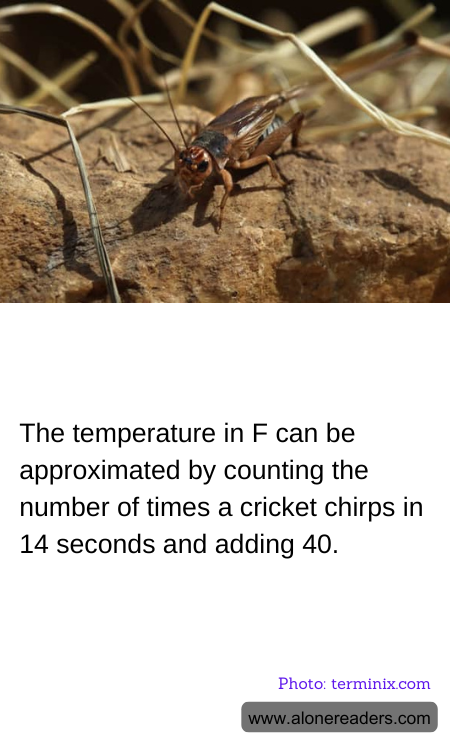
Nature often holds fascinating secrets, and one of its intriguing phenomena is the relationship between cricket chirps and temperature. This natural thermometer has been a subject of curiosity and study for many years. It is said that you can approximate the temperature in degrees Fahrenheit by simply counting the number of times a cricket chirps in 14 seconds and then adding 40 to that number. This simple yet effective method provides a unique way to connect with nature and understand the environment around us.
Crickets, like many other insects, are ectothermic, meaning their body temperature and activity levels are influenced by the surrounding environment. As temperatures rise, crickets become more active, leading to an increase in their chirping rate. This correlation between temperature and chirping frequency is what makes crickets a natural thermometer. The formula, often attributed to the American physicist Amos Dolbear, is a practical application of this natural phenomenon. Dolbear's Law, as it is known, was first published in 1897 and has since been a delightful piece of trivia for nature enthusiasts and scientists alike.
To try this method, find a quiet spot outdoors where crickets are chirping. Count the number of chirps you hear in a 14-second interval. Once you have your count, simply add 40 to that number to estimate the temperature in degrees Fahrenheit. For example, if you count 30 chirps in 14 seconds, adding 40 gives you an approximate temperature of 70°F. This method is most accurate when the temperature is between 55°F and 100°F, as crickets are less active outside this range.
While this method is not as precise as a digital thermometer, it offers a charming way to engage with the natural world. It can be a fun and educational activity for families, encouraging children to explore and learn about the environment. It also serves as a reminder of the intricate connections between living organisms and their habitats.
In addition to being a fun experiment, the cricket chirp method highlights the importance of biodiversity and the role of insects in ecosystems. Crickets, like many other insects, play a crucial role in the food chain and contribute to the health of their ecosystems. By paying attention to their behavior, we can gain insights into the health of our environment and the impacts of climate change.
In conclusion, the relationship between cricket chirps and temperature is a fascinating example of nature's wonders. It provides a simple, engaging way to estimate temperature while fostering a deeper appreciation for the natural world. Whether you're a seasoned naturalist or a curious beginner, this method offers a delightful opportunity to connect with nature and learn more about the environment around you.
