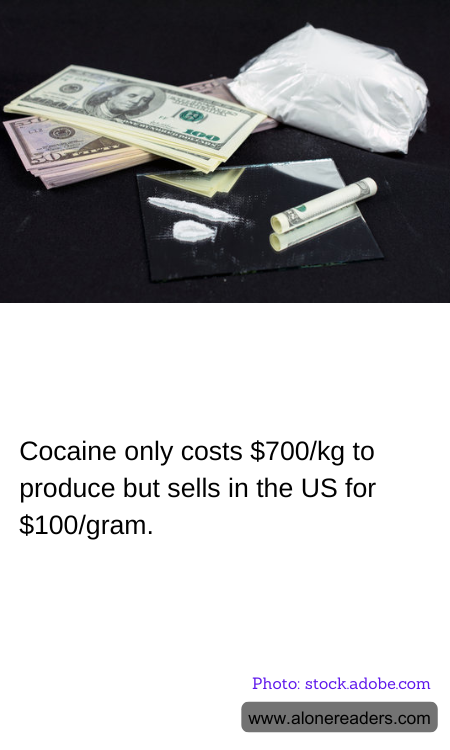
The stark contrast between the production cost and street value of cocaine highlights a complex web of economic, social, and legal factors that drive the global drug trade. At its core, the disparity between the $700 per kilogram production cost and the $100 per gram street price in the United States underscores the immense profitability of the illicit drug market. This discrepancy is not merely a reflection of the raw material costs but rather a testament to the risks, logistics, and demand that shape the cocaine trade.
Cocaine production primarily takes place in South American countries like Colombia, Peru, and Bolivia, where the coca plant is cultivated. The process of converting coca leaves into cocaine involves several steps, including extraction, purification, and refinement, which, despite being labor-intensive, remain relatively inexpensive. The low production cost is largely due to the abundance of coca plants and the low wages paid to laborers involved in the initial stages of production.
However, the journey from coca fields to the streets of the United States is fraught with peril and complexity. Traffickers must navigate a labyrinth of law enforcement agencies, border controls, and rival criminal organizations. The high risk of arrest, imprisonment, or even death significantly inflates the price as the drug moves through various hands. Each stage of the supply chain—from local producers to international cartels, and finally to street-level dealers—adds layers of cost, driven by the need to compensate for the inherent dangers involved.
Moreover, the demand for cocaine in the United States plays a crucial role in its high street price. Cocaine's reputation as a luxury drug, often glamorized in media and popular culture, fuels its desirability among certain demographics. This demand ensures that consumers are willing to pay a premium, further driving up the street price. The economics of supply and demand are at play, with traffickers capitalizing on the willingness of users to pay exorbitant prices for the drug.
Efforts to curb the cocaine trade have been extensive, involving international cooperation, stringent law enforcement, and public awareness campaigns. Despite these efforts, the high profitability continues to attract individuals and organizations willing to take significant risks. The disparity between production costs and street prices not only highlights the challenges faced by authorities but also underscores the need for comprehensive strategies that address both supply and demand.
In conclusion, the vast difference between the production cost and street price of cocaine is a reflection of the multifaceted nature of the drug trade. It is a market driven by risk, demand, and the allure of substantial profits. Understanding these dynamics is crucial for developing effective policies and interventions aimed at reducing the impact of cocaine on society.
