More About This Card
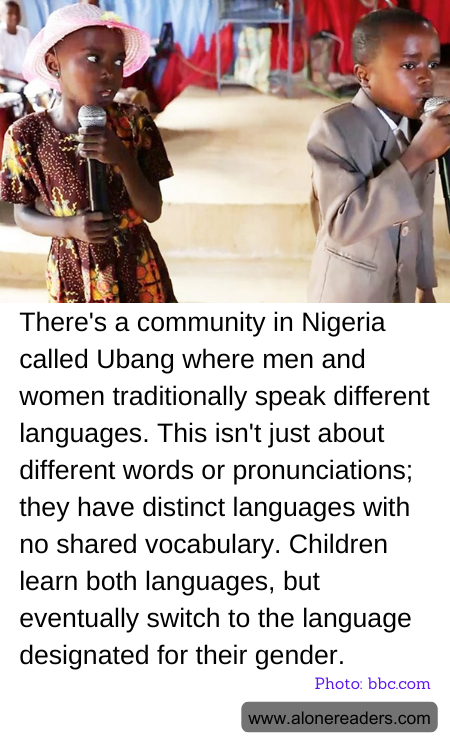
In the heart of Nigeria lies a unique community that defies conventional linguistic norms. Ubang, a small village in the southern part of the country, is home to a fascinating cultural phenomenon where men and women speak entirely different languages. This is not merely a case of varying dialects or accents; the languages spoken by each gender in Ubang have distinct vocabularies and structures, making this community a linguistic marvel.
The linguistic divide in Ubang is deeply rooted in tradition and culture. From a young age, children in the village are exposed to both languages. Boys learn the language of men, while girls are taught the language of women. This bilingual upbringing is a rite of passage, and by the time they reach puberty, children are expected to transition fully to the language associated with their gender. This transition is a significant cultural milestone, marking the child's integration into the adult community.
What makes Ubang particularly intriguing is the complete lack of shared vocabulary between the two languages. While many communities around the world have gendered language differences, these usually involve variations in tone, formality, or specific word choices. In contrast, the languages of Ubang are entirely separate entities. For instance, the word for "clothing" in the men's language is "nki," while in the women's language, it is "ariga." Such differences are pervasive across the lexicon, underscoring the distinctiveness of each language.
The origins of this linguistic duality are shrouded in mystery, with local legends offering various explanations. Some stories suggest that the languages were a divine gift, intended to foster harmony and balance between the sexes. Others propose that the linguistic separation was a strategic development to ensure that men and women could communicate privately within their gender groups. Regardless of its origins, the practice has persisted through generations, becoming a cornerstone of Ubang's cultural identity.
In a world where globalization often leads to the erosion of unique cultural practices, Ubang stands as a testament to the resilience of tradition. The community's commitment to preserving its linguistic heritage is evident in the way language is woven into the fabric of daily life. Conversations in Ubang are a dance of words, with men and women seamlessly switching between languages depending on the context and the audience.
The linguistic landscape of Ubang offers valuable insights into the complex interplay between language, culture, and identity. It challenges conventional notions of language as a unifying force, instead highlighting its role in defining and differentiating communities. As the world becomes increasingly interconnected, the story of Ubang serves as a reminder of the rich tapestry of human expression and the importance of preserving linguistic diversity.
In conclusion, Ubang is more than just a village with two languages; it is a living example of how language can shape and reflect the social structures of a community. The distinct languages of men and women in Ubang are not just a curiosity but a vital part of the community's cultural heritage, offering a unique perspective on the power of language to both unite and distinguish.