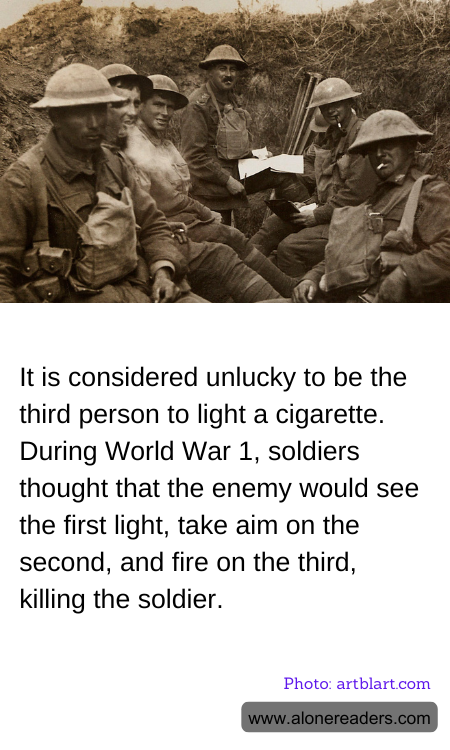
The superstition that it is unlucky to be the third person to light a cigarette has its roots in the grim realities of World War I. This belief, which has persisted through the years, is not merely a whimsical notion but rather a reflection of the harsh conditions faced by soldiers in the trenches. The origin of this superstition is tied to the practical dangers of lighting a match in the dark, a seemingly innocuous act that could have deadly consequences.
During World War I, soldiers often found themselves in perilous situations where the smallest mistake could lead to fatal outcomes. The trenches were places of constant vigilance, where the enemy was always lurking, waiting for any sign of movement or light that could reveal a target. Lighting a cigarette was one such activity that could inadvertently expose a soldier's position. The superstition suggests that when a match was struck, the enemy would notice the first light. By the time the second cigarette was lit, the enemy would have taken aim, and when the third cigarette was lit, the enemy would fire, potentially killing the soldier holding it.
This belief was not just a matter of superstition but a practical strategy for survival. In the dim and dangerous environment of the trenches, any light could attract unwanted attention. Soldiers quickly learned to minimize their exposure by limiting the number of people who lit their cigarettes from a single match. This practice was not only a means of self-preservation but also a way to protect their comrades from unnecessary risk.
The superstition of the third light has endured beyond the battlefield, becoming a part of popular culture and everyday life. It serves as a reminder of the ingenuity and adaptability of soldiers who had to find ways to cope with the constant threat of danger. While the superstition may seem outdated in today's world, it is a testament to the resourcefulness and camaraderie that characterized those who served in the war.
In modern times, the superstition is often recounted as a quirky piece of trivia, a nod to the past that highlights the lengths to which people will go to protect themselves and others. It underscores the human tendency to create rituals and beliefs in response to fear and uncertainty. While the original context of the superstition may have faded, its legacy continues, offering a glimpse into the lives of those who lived through one of history's most challenging periods.
