More About This Card
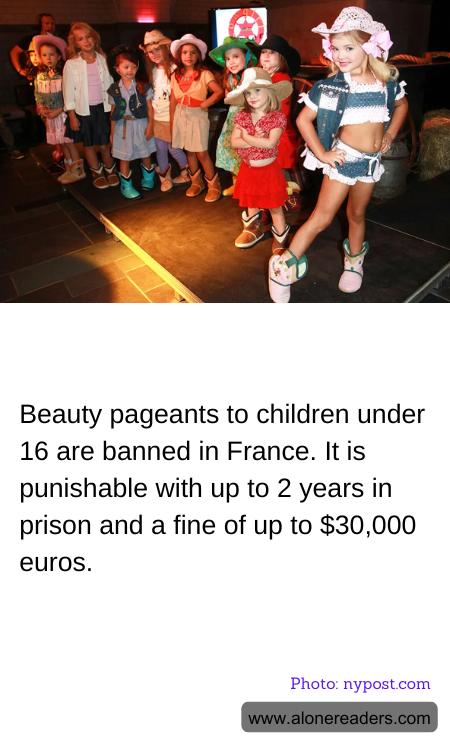
In a significant move aimed at protecting the well-being of children, France has implemented a ban on beauty pageants for individuals under the age of 16. This legislation, which carries the weight of up to two years in prison and a fine of up to 30,000 euros for violators, underscores the country's commitment to safeguarding the physical and psychological health of its youth.
The decision to ban child beauty pageants in France stems from growing concerns about the impact these events can have on young participants. Critics argue that such pageants place undue pressure on children to conform to adult standards of beauty, potentially leading to issues such as low self-esteem, body image disorders, and an unhealthy focus on physical appearance. By prohibiting these competitions, France aims to shield children from the commercial and societal pressures that often accompany participation in beauty contests.
Supporters of the ban emphasize the importance of allowing children to enjoy their formative years free from the constraints of adult expectations. They argue that childhood should be a time for exploration, learning, and development, rather than a period marked by competition and scrutiny. By removing the allure of beauty pageants, France hopes to encourage a more holistic approach to childhood development, one that prioritizes education, creativity, and personal growth over superficial accolades.
The legislation has sparked a broader conversation about the role of beauty pageants in society and the messages they convey to young people. While some view these events as harmless fun or a platform for building confidence, others see them as a reflection of a culture that places excessive value on appearance. The French ban serves as a reminder of the need to critically assess the environments we create for children and the values we impart to them.
France's decision has also prompted discussions in other countries about the potential benefits of similar legislation. As societies around the world grapple with issues related to child welfare and the influence of media and culture, the French model offers a compelling example of proactive policy-making. By prioritizing the health and happiness of its youngest citizens, France is setting a precedent that may inspire other nations to reevaluate their own approaches to child beauty pageants.
In conclusion, France's ban on beauty pageants for children under 16 represents a decisive step towards protecting the innocence and well-being of its youth. By imposing strict penalties on those who organize such events, the country is sending a clear message about the importance of nurturing a healthy and balanced environment for children. As the world continues to evolve, it is crucial that we remain vigilant in our efforts to create spaces where young people can thrive, free from the pressures and expectations of adult life.