More About This Card
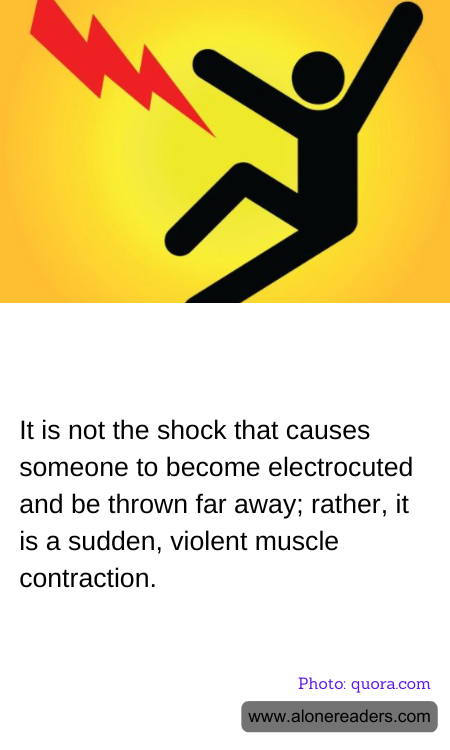
When we hear stories of someone being electrocuted and thrown across a room, it is easy to imagine that the force of the electricity itself is responsible for the dramatic movement. However, the reality is quite different. The sensation of being thrown is not due to the electrical shock per se, but rather the result of a sudden, violent muscle contraction triggered by the electric current passing through the body.
Electricity is a powerful force that can disrupt the normal functioning of the human body. When an electrical current passes through the body, it can cause muscles to contract involuntarily. This is because our muscles are controlled by electrical signals from the nervous system. When an external electrical current interferes with these signals, it can cause muscles to contract forcefully and suddenly. This involuntary contraction can be so intense that it propels the person away from the source of the electricity, creating the impression that they have been thrown by the shock itself.
The severity of these muscle contractions depends on several factors, including the strength of the electrical current, the path it takes through the body, and the duration of exposure. Even a relatively low voltage can cause significant muscle contractions if the current passes through critical areas such as the heart or the central nervous system. In more severe cases, these contractions can lead to broken bones, dislocated joints, or other injuries as the body is violently jerked.
Understanding the mechanics behind electrocution is crucial for both prevention and response. It highlights the importance of safety measures when dealing with electricity, such as using insulated tools, wearing protective gear, and ensuring that electrical systems are properly maintained. It also underscores the need for immediate medical attention if someone is electrocuted, as the internal damage caused by muscle contractions and the electrical current itself can be life-threatening.
In conclusion, the dramatic effects of electrocution are not due to the electricity throwing a person, but rather the body's own muscles reacting violently to the electrical interference. This knowledge not only demystifies a common misconception but also emphasizes the importance of treating electricity with respect and caution. By understanding the true nature of electrocution, we can better protect ourselves and others from its potentially deadly consequences.