More About This Card
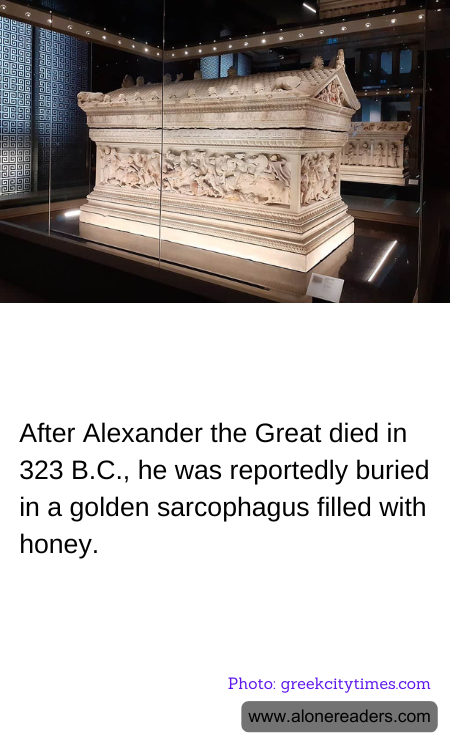
The death of Alexander the Great in 323 B.C. marked the end of an era characterized by unprecedented military conquests and cultural integration across vast territories. Known for his strategic genius and ambitious vision, Alexander's legacy continued to captivate the world long after his demise. One of the most intriguing aspects of his posthumous story is the manner in which he was reportedly buried: in a golden sarcophagus filled with honey.
The choice of honey as a preservative for Alexander's body is both fascinating and symbolic. In ancient times, honey was revered not only for its sweetness but also for its remarkable preservative qualities. The natural sugars in honey create an environment that inhibits the growth of bacteria and fungi, making it an effective means of preserving organic material. This property would have been particularly appealing to those tasked with ensuring that Alexander's body remained intact during the long journey from Babylon, where he died, to its final resting place.
The use of a golden sarcophagus further underscores the grandeur and reverence with which Alexander was regarded. Gold, a symbol of wealth and divinity, was a fitting tribute to a man who had been declared a god by some of his contemporaries. The opulence of such a burial container reflected not only Alexander's status as a ruler but also the immense wealth he had accumulated through his conquests. It is said that the sarcophagus was later encased in a second, more elaborate coffin, underscoring the importance of his burial.
The journey of Alexander's body to its final resting place was itself a saga. Initially intended to be interred in Macedonia, his body was intercepted by Ptolemy, one of his generals, who diverted it to Egypt. Ptolemy's decision to bury Alexander in Alexandria was both a strategic and symbolic move, as it helped legitimize his rule over Egypt and cemented the city's status as a center of culture and power. The tomb of Alexander the Great became a site of pilgrimage and reverence, drawing visitors from across the ancient world.
Despite the grandeur of his burial, the exact location of Alexander's tomb remains one of history's enduring mysteries. Over the centuries, numerous attempts have been made to locate it, but none have been definitively successful. The allure of discovering the final resting place of one of history's most legendary figures continues to captivate archaeologists and historians alike.
In the end, the story of Alexander's burial in a golden sarcophagus filled with honey is a testament to the enduring fascination with his life and legacy. It reflects the blend of myth and reality that surrounds his story, a narrative that continues to inspire and intrigue people of all ages. As we ponder the mysteries of the past, Alexander the Great's burial remains a poignant reminder of the ways in which history and legend intertwine.