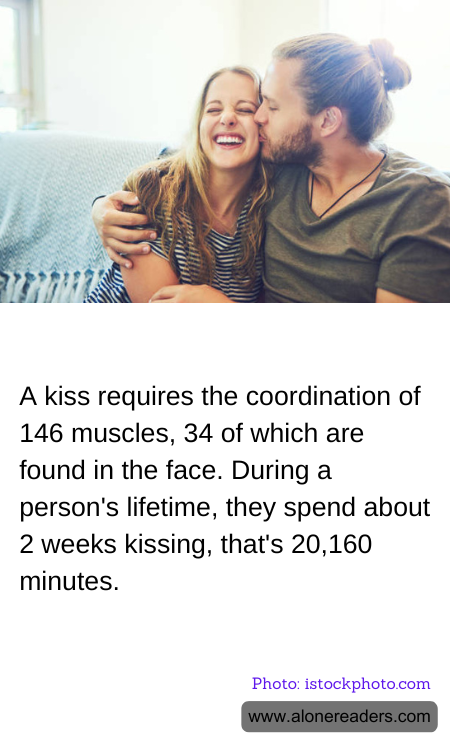
Kissing is a universal expression of affection that transcends cultures and languages, yet few people realize the intricate coordination involved in this seemingly simple act. A kiss requires the synchronization of 146 muscles, with 34 of these located in the face. This complex orchestration of muscles highlights the sophistication of human anatomy and the subtlety of our emotional expressions.
The facial muscles play a crucial role in the act of kissing. The orbicularis oris, often referred to as the "kissing muscle," is primarily responsible for puckering the lips. Meanwhile, other facial muscles contribute to the myriad of expressions that accompany a kiss, from a gentle peck to a passionate embrace. The coordination extends beyond the face, involving muscles in the neck, shoulders, and even the diaphragm, which helps regulate breathing during prolonged kisses.
Kissing is not only a physical act but also a significant emotional and social gesture. It serves as a means of bonding, a way to express love and affection, and even a method of communication. The act of kissing can convey a wide range of emotions, from comfort and reassurance to excitement and desire. This versatility makes kissing an integral part of human relationships and a subject of fascination across various fields, including psychology, anthropology, and even neuroscience.
Throughout a person's lifetime, they spend approximately two weeks kissing, which equates to about 20,160 minutes. This statistic underscores the importance of kissing in human life, not just as a romantic gesture but as a fundamental aspect of social interaction. The time spent kissing contributes to the strengthening of relationships, the release of feel-good hormones like oxytocin, and the reduction of stress levels. These benefits highlight the role of kissing in promoting emotional well-being and fostering human connection.
Kissing is a timeless act that continues to captivate people of all ages. Whether it's a tender kiss on the forehead from a parent, a playful peck between friends, or a passionate embrace between lovers, the act of kissing remains a powerful expression of human emotion. Its complexity, both in terms of physical coordination and emotional significance, makes it a fascinating subject worthy of appreciation and study.
In conclusion, the act of kissing is much more than a simple gesture. It is a complex interplay of muscles and emotions that plays a vital role in human relationships. The time spent kissing throughout a lifetime is a testament to its importance in our lives, serving as a reminder of the profound connections we share with others. As we continue to explore the depths of human interaction, the kiss remains a symbol of love, unity, and the intricate beauty of human expression.
