More About This Card
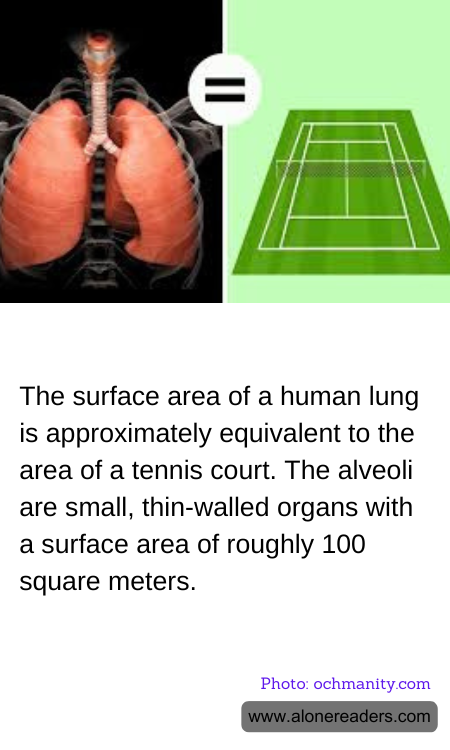
The human lung is a marvel of biological engineering, designed to efficiently facilitate the exchange of gases essential for life. One of the most fascinating aspects of the lung is its surface area, which is approximately equivalent to the area of a tennis court. This expansive surface area is primarily due to the presence of alveoli, the small, thin-walled sacs that play a crucial role in respiration.
Alveoli are microscopic structures, yet they are incredibly numerous, with an estimated 300 million to 500 million alveoli in a healthy adult lung. These tiny sacs are where the magic of gas exchange happens. Oxygen from the air we breathe diffuses through the walls of the alveoli and into the surrounding capillaries, while carbon dioxide from the blood diffuses in the opposite direction to be exhaled. The thin walls of the alveoli, only one cell thick, facilitate this exchange, allowing for efficient transfer of gases.
The combined surface area of all the alveoli in the lungs is roughly 100 square meters, which is about the size of a tennis court. This extensive surface area is vital because it maximizes the amount of oxygen that can be absorbed into the bloodstream with each breath. The large surface area also ensures that carbon dioxide, a waste product of metabolism, is effectively removed from the body. This efficient exchange is crucial for maintaining the body's pH balance and ensuring that tissues receive the oxygen they need to function properly.
The design of the alveoli is a testament to the efficiency of natural selection. Their spherical shape provides a large surface area relative to their volume, optimizing the space within the lungs. Moreover, the elasticity of the alveolar walls allows them to expand and contract with each breath, further enhancing their capacity to facilitate gas exchange.
Understanding the structure and function of the alveoli underscores the importance of maintaining lung health. Factors such as smoking, pollution, and respiratory infections can damage the delicate alveolar walls, reducing their surface area and impairing their function. This can lead to conditions such as emphysema, where the destruction of alveolar walls results in reduced respiratory efficiency.
In conclusion, the human lung's surface area, comparable to that of a tennis court, is a remarkable feature that highlights the complexity and efficiency of the respiratory system. The alveoli, with their vast surface area and thin walls, are central to this system, ensuring that our bodies receive the oxygen they need while expelling carbon dioxide. Protecting and preserving lung health is essential for maintaining this delicate balance and ensuring our overall well-being.