More About This Card
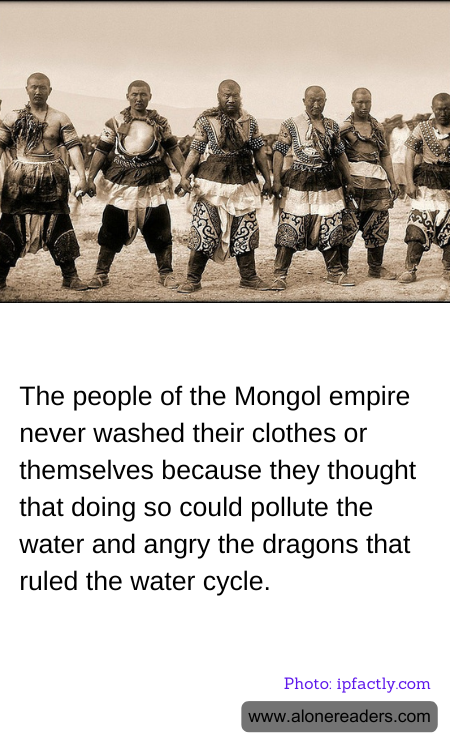
The Mongol Empire, one of the largest contiguous empires in history, is often remembered for its military prowess and the vast territories it conquered under the leadership of Genghis Khan and his successors. However, beyond their formidable conquests, the Mongols had unique cultural practices and beliefs that governed their daily lives. One such belief was their approach to personal hygiene and cleanliness, which was deeply intertwined with their spiritual and environmental views.
The Mongols held a profound respect for nature, which was reflected in their animistic and shamanistic beliefs. They believed that natural elements were inhabited by spirits, and among these, water was considered sacred. Water was not merely a resource but a vital component of the spiritual world, governed by powerful dragons. These dragons were thought to control the water cycle, ensuring the balance and flow of rivers, lakes, and rain. As a result, the Mongols were cautious about polluting water sources, fearing that such actions could anger the dragons and disrupt the natural order.
This reverence for water led to the practice of avoiding washing their clothes and themselves. The Mongols believed that washing would contaminate the water, thereby offending the dragons. Such an offense could have dire consequences, potentially leading to droughts or other natural calamities. Therefore, personal cleanliness was not prioritized in the way it was in other cultures, where bathing was a regular practice. Instead, the Mongols found alternative ways to maintain hygiene, such as using the smoke from burning herbs to cleanse themselves and their garments.
While this practice might seem unusual from a modern perspective, it highlights the Mongols' deep connection to their environment and their desire to live in harmony with the natural world. Their lifestyle was largely nomadic, and they depended heavily on the land for sustenance. This dependence fostered a sense of stewardship and respect for natural resources, which was reflected in their customs and rituals.
The Mongols' approach to hygiene also underscores the diversity of cultural practices across different societies. It serves as a reminder that what might be considered essential in one culture can be viewed differently in another, shaped by unique beliefs and environmental conditions. Understanding these differences enriches our appreciation of human history and the myriad ways in which people have adapted to their surroundings.
In today's world, where environmental concerns are increasingly pressing, the Mongols' respect for natural resources offers a valuable lesson. It encourages us to consider the impact of our actions on the environment and to seek ways to live sustainably. While modern hygiene practices have evolved significantly, the underlying principle of respecting and preserving our natural world remains as relevant as ever.