More About This Card
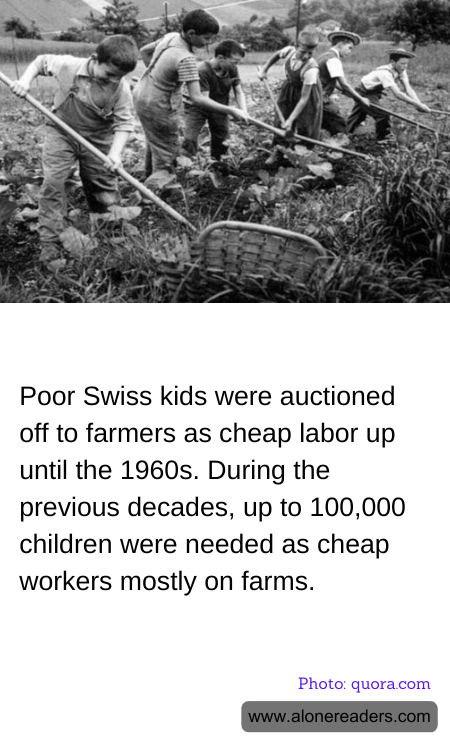
In the picturesque landscapes of Switzerland, known for its serene beauty and affluence, lies a lesser-known chapter of history that casts a shadow over its idyllic image. Up until the 1960s, a practice persisted that saw poor Swiss children auctioned off to farmers as cheap labor. This dark period, often referred to as the "Verdingkinder" era, involved the exploitation of up to 100,000 children, who were primarily used as laborers on farms.
The origins of this practice can be traced back to the 19th century, when poverty-stricken families, unable to care for their children, would relinquish them to the state. These children, often orphans or from single-parent households, were then placed in the care of foster families. However, rather than providing a nurturing environment, many of these placements were driven by economic incentives. Farmers, in need of inexpensive labor, would take in these children, who were expected to work long hours under harsh conditions in exchange for basic shelter and food.
Life for these children was far from the idyllic Swiss countryside that postcards depict. Many endured grueling workdays, often starting before dawn and ending after dusk, with little time for education or play. The work was physically demanding, and the children were frequently subjected to neglect and abuse. The lack of oversight and regulation meant that these young laborers had little recourse to escape their plight.
The societal attitudes of the time contributed to the perpetuation of this system. Children from impoverished backgrounds were often stigmatized and viewed as a burden, making it easier for society to turn a blind eye to their suffering. The practice was justified under the guise of providing these children with a home and teaching them a trade, but in reality, it was a system that exploited their vulnerability for economic gain.
It wasn't until the mid-20th century that awareness and criticism of the Verdingkinder system began to grow. Social reforms and changing attitudes towards child welfare eventually led to the decline of this practice. By the 1960s, the Swiss government started to implement measures to protect children's rights and ensure their well-being, marking the end of this dark chapter.
Today, Switzerland has made significant strides in addressing the injustices of the past. Efforts have been made to acknowledge and compensate the victims of the Verdingkinder system. Public apologies and financial reparations have been offered, and the stories of these children are being preserved to ensure that such a history is not forgotten.
This somber history serves as a reminder of the resilience of those who endured such hardships and the importance of safeguarding the rights and dignity of all children. As Switzerland continues to reconcile with its past, it stands as a testament to the power of acknowledging history to foster a more just and compassionate society.