More About This Card
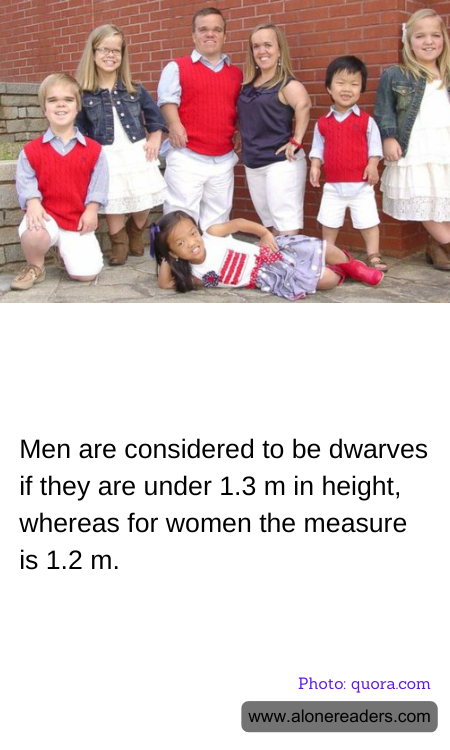
Dwarfism is a medical or genetic condition characterized by an adult height of 4 feet 10 inches (147 centimeters) or shorter. However, the specific thresholds for defining dwarfism can vary slightly depending on the context and the source of the definition. In some discussions, particularly those focusing on medical criteria, men are considered to be dwarves if they are under 1.3 meters (approximately 4 feet 3 inches) in height, while for women, the measure is slightly lower at 1.2 meters (approximately 3 feet 11 inches).
These height thresholds are not arbitrary but are based on the average height differences between men and women. Generally, men tend to be taller than women, which is why the height criterion for dwarfism is slightly higher for men. This distinction helps in providing a more accurate and fair classification that takes into account natural variations in human height.
Dwarfism can result from over 300 different medical conditions, with the most common being achondroplasia. This condition affects bone growth, leading to shorter stature. People with dwarfism often have a normal-sized torso with shorter limbs, although the specific physical characteristics can vary widely depending on the underlying cause. Despite their shorter stature, individuals with dwarfism can lead full and active lives. They often face unique challenges, such as accessibility issues and social stigmatization, but many advocate for greater awareness and inclusion.
In society, perceptions of dwarfism have evolved over time. Historically, individuals with dwarfism were often marginalized or misunderstood. However, increased awareness and representation in media and public life have contributed to a more inclusive understanding. Today, many people with dwarfism are active in advocating for their rights and raising awareness about their experiences. Organizations and support groups play a crucial role in providing resources and fostering community among individuals with dwarfism and their families.
It is important to approach the topic of dwarfism with sensitivity and respect. Language matters, and terms like "little people" or "persons of short stature" are often preferred by those within the community. Understanding the medical and social aspects of dwarfism can help foster a more inclusive society where individuals are recognized for their abilities and contributions rather than their physical differences.
In conclusion, while the specific height criteria for defining dwarfism may vary slightly between men and women, the focus should be on understanding and supporting individuals with this condition. By promoting awareness and inclusivity, society can ensure that everyone, regardless of height, has the opportunity to thrive and participate fully in all aspects of life.