More About This Card
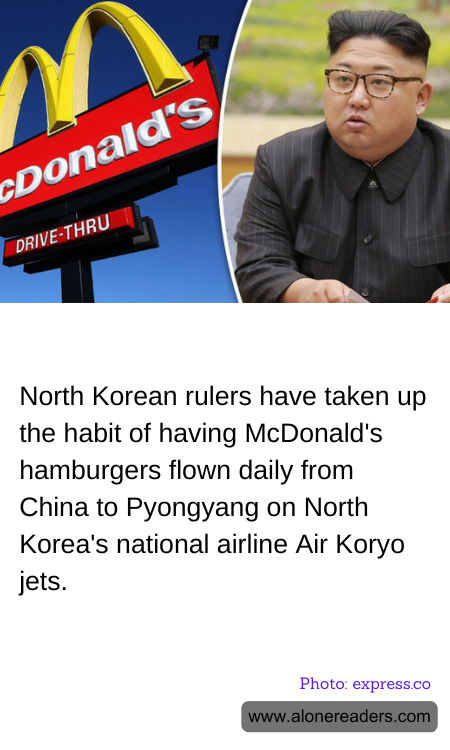
In a world where fast food has become a staple of modern life, even the most isolated corners of the globe are not immune to its allure. Recent reports suggest that North Korea's ruling elite have developed a taste for McDonald's hamburgers, going to extraordinary lengths to satisfy their cravings. These reports indicate that McDonald's hamburgers are being flown daily from China to Pyongyang, the capital of North Korea, aboard Air Koryo jets, the country's national airline.
This peculiar habit highlights the stark contrast between the lifestyle of North Korea's ruling class and the everyday reality faced by its citizens. While the majority of North Koreans continue to grapple with food shortages and economic hardships, the ruling elite's penchant for imported fast food underscores the deep-seated inequalities within the country. The daily importation of McDonald's hamburgers is not just a testament to the power and privilege enjoyed by the elite but also a symbol of the regime's complex relationship with the outside world.
The logistics of flying hamburgers from China to North Korea are as intriguing as the story itself. Air Koryo, known for its aging fleet and limited international routes, has become an unlikely conduit for this fast-food supply chain. The operation involves meticulous planning and coordination, ensuring that the hamburgers remain fresh upon arrival. This daily ritual not only reflects the ruling class's desire for Western luxuries but also highlights the lengths to which they will go to maintain their lifestyle.
This development also raises questions about North Korea's evolving relationship with China. As the primary source of these hamburgers, China plays a crucial role in facilitating this unusual import. The arrangement suggests a level of cooperation and understanding between the two nations, despite the broader geopolitical tensions that often characterize their interactions. It also underscores China's influence over North Korea, as the latter relies on its neighbor for both economic support and, apparently, culinary indulgences.
While the story of McDonald's hamburgers being flown into North Korea may seem trivial at first glance, it offers a unique lens through which to view the complexities of life in one of the world's most secretive nations. It serves as a reminder of the stark disparities within North Korean society and the lengths to which the ruling elite will go to enjoy the comforts of the outside world. As the global community continues to grapple with the challenges posed by North Korea, stories like these provide a glimpse into the enigmatic world of its leadership, where even the simplest of pleasures are pursued with remarkable determination.