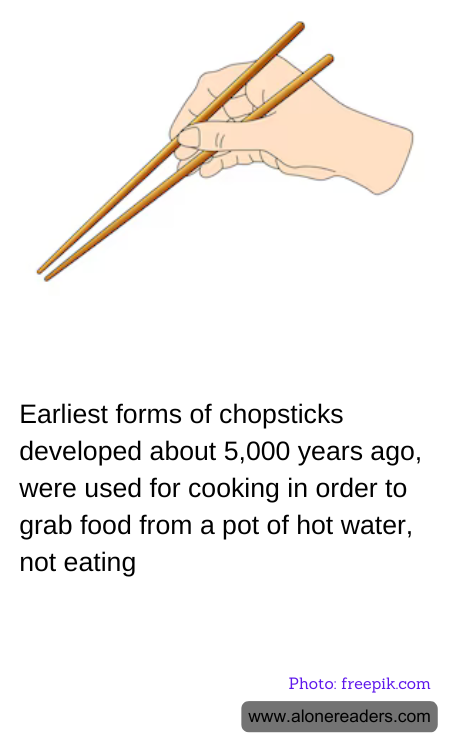
Chopsticks, a quintessential symbol of Asian dining culture, have a history that stretches back thousands of years. While today they are primarily associated with eating, their earliest forms were not intended for this purpose. Approximately 5,000 years ago, the first chopsticks emerged as practical tools for cooking rather than dining. These early implements were used to retrieve food from pots of boiling water, a testament to the ingenuity of ancient culinary practices.
The origins of chopsticks can be traced back to ancient China during the Shang Dynasty. During this period, the need for a tool to handle hot food became apparent as cooking techniques evolved. The earliest chopsticks were likely made from twigs or bamboo, materials that were readily available and could withstand the heat of cooking. These rudimentary tools allowed cooks to reach into pots of hot water or oil, turning and retrieving food without risking burns or other injuries.
The use of chopsticks for cooking was not only a practical solution but also a reflection of the broader cultural and technological advancements of the time. As societies transitioned from nomadic lifestyles to more settled agricultural communities, cooking methods became more sophisticated. The development of chopsticks coincided with the increased use of pots and pans, which required tools that could manipulate food in a controlled and safe manner.
Over time, the role of chopsticks expanded beyond the confines of the kitchen. As they became more refined in design and craftsmanship, their use gradually extended to the dining table. By the Han Dynasty, chopsticks had evolved into the eating utensils we recognize today. This transition was influenced by the growing popularity of shared meals and communal dining, where chopsticks facilitated the easy transfer of food from communal dishes to individual bowls.
The evolution of chopsticks from cooking tools to dining utensils also reflects broader cultural shifts. As societies became more complex, so too did their dining customs and etiquette. The use of chopsticks became a symbol of sophistication and cultural identity, spreading beyond China to other parts of Asia, including Japan, Korea, and Vietnam. Each culture adapted the design and use of chopsticks to suit their culinary traditions, resulting in a rich diversity of styles and techniques.
In modern times, chopsticks remain an integral part of Asian cuisine, celebrated for their simplicity and versatility. While their primary function has shifted from cooking to eating, their historical roots as essential kitchen tools are a reminder of the innovative spirit of ancient cultures. The story of chopsticks is not just about a utensil but about the evolution of human ingenuity in the face of everyday challenges. As such, they continue to be a fascinating subject of study and appreciation for people around the world.
