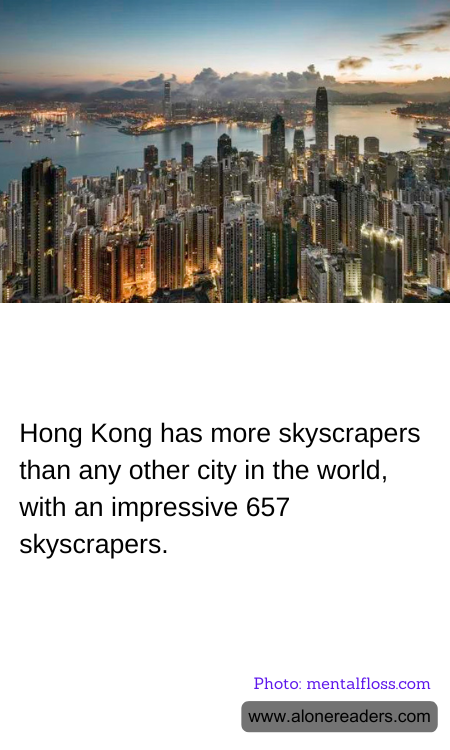
Hong Kong, a bustling metropolis known for its vibrant culture and dynamic economy, holds a remarkable distinction in the world of architecture. With an impressive 657 skyscrapers, it surpasses any other city globally in terms of vertical structures. This architectural feat is not just a testament to human ingenuity but also a reflection of Hong Kong's unique geographical and economic landscape.
The city's skyline is a mesmerizing blend of modernity and tradition, where towering glass and steel structures coexist with historic temples and colonial-era buildings. The sheer number of skyscrapers is a response to Hong Kong's limited land space, which has driven the city to build upwards rather than outwards. This vertical expansion is a necessity in a city where every square meter is precious, and it has led to some of the most innovative architectural designs in the world.
Hong Kong's skyscrapers are more than just feats of engineering; they are symbols of the city's economic prowess. As a global financial hub, Hong Kong attracts businesses from around the world, necessitating the development of high-rise office spaces to accommodate the influx of international companies. These skyscrapers house some of the world's most influential financial institutions, making the city a pivotal player in the global economy.
The skyline is not only a testament to economic success but also a canvas for artistic expression. Iconic buildings like the Bank of China Tower and the International Commerce Centre are celebrated for their unique designs and have become landmarks in their own right. At night, the skyline transforms into a dazzling display of lights, with many buildings participating in the Symphony of Lights, a nightly multimedia show that highlights the city's architectural beauty.
Despite the challenges of building in a densely populated area, Hong Kong has managed to maintain a balance between development and sustainability. Many of its skyscrapers incorporate green building practices, such as energy-efficient systems and sustainable materials, reflecting the city's commitment to environmental responsibility.
In conclusion, Hong Kong's status as the city with the most skyscrapers is a remarkable achievement that underscores its role as a leader in urban development and economic vitality. The skyline is not just a collection of buildings; it is a symbol of the city's resilience, innovation, and forward-thinking spirit. As Hong Kong continues to grow and evolve, its skyline will undoubtedly remain a source of inspiration and pride for its residents and a marvel for visitors from around the world.
