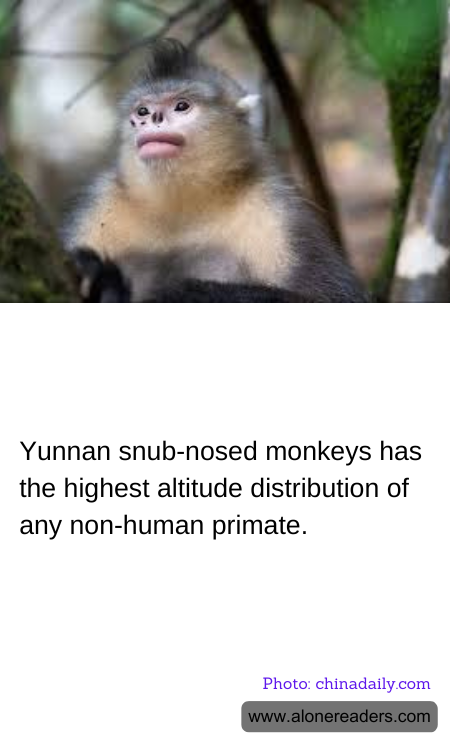
The Yunnan snub-nosed monkey, also known as the black snub-nosed monkey or Rhinopithecus bieti, is a remarkable primate species that has captured the fascination of scientists and nature enthusiasts alike. This elusive creature holds the distinction of having the highest altitude distribution of any non-human primate, thriving in the rugged, mountainous regions of southwestern China. Found primarily in the Yunnan Province and parts of the Tibet Autonomous Region, these monkeys inhabit elevations ranging from 3,000 to 4,500 meters (approximately 9,800 to 14,800 feet) above sea level, where the air is thin and the climate is harsh.
Adapted to survive in such extreme conditions, the Yunnan snub-nosed monkey exhibits several unique physical and behavioral traits. Its dense, woolly fur provides insulation against the cold temperatures, which can plummet well below freezing during the winter months. The monkeys' distinctive upturned noses, which give them their name, are thought to be an adaptation to prevent frostbite and to help them breathe in the cold, dry air. These adaptations are crucial for their survival in an environment where few other primates could endure.
The social structure of the Yunnan snub-nosed monkey is another fascinating aspect of their biology. They live in large, multi-level groups that can consist of several hundred individuals. These groups are typically composed of smaller family units, each led by a dominant male. This complex social organization helps them navigate their challenging environment, as they work together to find food and protect each other from predators. Their diet primarily consists of lichens, leaves, and fruits, which they forage from the trees and shrubs that dot their mountainous habitat.
Despite their resilience, Yunnan snub-nosed monkeys face significant threats, primarily due to human activities. Habitat destruction from logging and agricultural expansion has reduced their natural range, while climate change poses an additional risk by altering the delicate balance of their ecosystem. Conservation efforts are underway to protect these unique primates, with several nature reserves established to safeguard their habitat. Researchers and conservationists are also working to raise awareness about the importance of preserving this species and the biodiversity of the region.
The Yunnan snub-nosed monkey serves as a powerful symbol of the incredible adaptability of life on Earth. Its ability to thrive in one of the most challenging environments highlights the importance of preserving our planet's diverse ecosystems. By protecting these remarkable creatures and their habitats, we not only ensure their survival but also contribute to the health and stability of the global environment. As we continue to learn more about these high-altitude primates, they remind us of the intricate connections between all living things and the need to cherish and protect our natural world.
