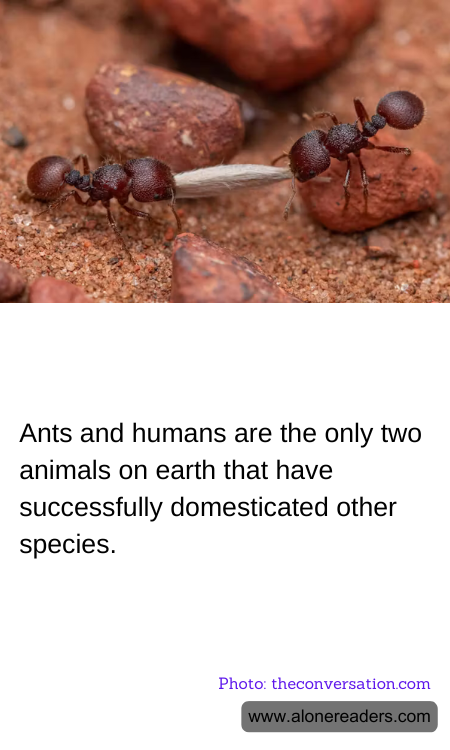
In the vast tapestry of life on Earth, humans and ants stand out as unique architects of domestication. While the concept of domestication is often associated with human civilization, ants have been quietly practicing their own form of this complex behavior for millions of years. This fascinating parallel between humans and ants offers a glimpse into the intricate relationships that can develop between species.
Humans have long been known for their ability to domesticate a wide variety of animals and plants, a skill that has been pivotal in shaping human societies. From the taming of wolves into dogs to the cultivation of crops like wheat and rice, domestication has allowed humans to harness the natural world to meet their needs. This process involves selective breeding and nurturing of species to enhance desirable traits, such as docility in animals or increased yield in plants. The result is a symbiotic relationship where both humans and the domesticated species benefit.
Ants, on the other hand, have been practicing their own form of domestication for millions of years, long before humans appeared on the scene. One of the most well-known examples is the relationship between certain ant species and aphids. Ants "farm" aphids for their sugary secretions, known as honeydew, which is a valuable food source. In return, ants protect aphids from predators and sometimes even transport them to fresh plants to ensure a steady supply of honeydew. This mutualistic relationship is a clear example of domestication, where ants have effectively "tamed" another species for their benefit.
Another remarkable example of ant domestication is found in leafcutter ants, which cultivate fungus as their primary food source. These ants meticulously cut leaves and transport them back to their nests, where they use them to cultivate a specific type of fungus. The fungus, in turn, provides nourishment for the ants. This sophisticated agricultural system is a testament to the ants' ability to manipulate their environment and establish a sustainable food source, much like human farmers.
The parallels between human and ant domestication are striking, yet the motivations and methods differ. Humans have used domestication as a tool for survival, economic development, and cultural advancement. Ants, driven by instinct and evolutionary pressures, have developed domestication strategies that ensure their survival and the success of their colonies. Both species demonstrate the remarkable capacity of life on Earth to adapt and innovate.
In exploring the domestication practices of ants and humans, we gain a deeper appreciation for the complexity and diversity of life. These two species, separated by millions of years of evolution, have independently developed strategies to manipulate their environments and form symbiotic relationships with other species. This shared ability underscores the interconnectedness of life and the endless possibilities that arise from cooperation and adaptation. As we continue to study these fascinating behaviors, we are reminded of the intricate web of life that binds us all.
