More About This Card
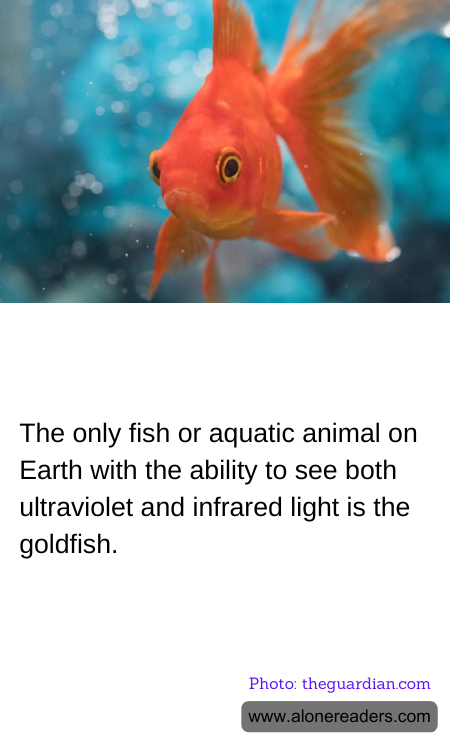
The goldfish, a common and beloved pet found in households and aquariums worldwide, holds a unique distinction in the animal kingdom. It is the only fish or aquatic animal known to possess the extraordinary ability to see both ultraviolet (UV) and infrared (IR) light. This remarkable visual capability sets the goldfish apart, offering it a distinct advantage in its natural environment and making it a subject of fascination for scientists and pet enthusiasts alike.
In the underwater world, light behaves differently than it does on land. Water absorbs and scatters light, with certain wavelengths penetrating deeper than others. For most aquatic creatures, this means that their vision is limited to the visible spectrum, similar to humans. However, the goldfish's eyes are equipped with specialized photoreceptor cells that allow it to detect a broader range of light wavelengths. This includes the ability to perceive ultraviolet light, which is shorter than the visible spectrum, and infrared light, which is longer.
The ability to see ultraviolet light is particularly advantageous for goldfish. UV vision can enhance contrast and detail in their environment, making it easier for them to spot predators, prey, and potential mates. It also aids in navigation and foraging, as many aquatic plants and organisms reflect UV light, creating a vivid and dynamic underwater landscape. This capability is especially beneficial in murky or low-light conditions, where UV light can penetrate more effectively than visible light.
Infrared vision, on the other hand, allows goldfish to detect heat signatures. This can be crucial for survival, as it helps them sense the presence of warm-blooded predators or changes in water temperature. While infrared light does not penetrate water as deeply as UV light, the ability to detect it gives goldfish an edge in environments where temperature gradients play a significant role in the distribution of resources and threats.
The goldfish's unique visual abilities are a testament to the incredible diversity and adaptability of life on Earth. These capabilities not only enhance their survival in the wild but also contribute to their popularity as pets. Observing a goldfish in an aquarium, one might not immediately appreciate the complexity of its vision, but understanding this aspect of their biology adds a layer of wonder to their seemingly simple existence.
In conclusion, the goldfish's ability to see both ultraviolet and infrared light is a rare and fascinating trait that underscores the complexity of the natural world. It serves as a reminder of the myriad ways in which animals have evolved to thrive in their environments, often in ways that are invisible to the human eye. Whether in the wild or in a home aquarium, the goldfish continues to captivate and inspire, offering a glimpse into the hidden wonders of aquatic life.