More About This Card
Chinese New Year, also known as Lunar New Year, is a vibrant and culturally rich celebration that spans 15 days, marking the beginning of the lunar calendar. Unlike the fixed date of January 1st in the Western calendar, the start of the Chinese New Year varies each year, falling between January 21 and February 20. This variation is due to the lunar calendar's reliance on the cycles of the moon, with the new year commencing on the new moon closest to the beginning of spring.
The festivities are deeply rooted in tradition and are celebrated with great enthusiasm by Chinese communities worldwide. Each day of the 15-day celebration holds its own significance, filled with customs and rituals that have been passed down through generations. The first day is particularly important, as it sets the tone for the rest of the year. Families gather to honor their ancestors, offer prayers, and enjoy a feast that symbolizes abundance and prosperity. Red decorations, symbolizing good luck and warding off evil spirits, adorn homes and public spaces, creating a festive atmosphere.
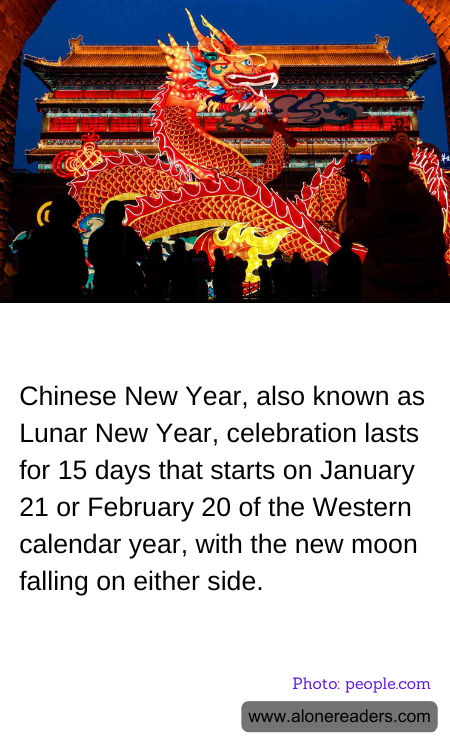
One of the most iconic aspects of the Chinese New Year is the dragon and lion dances. These performances are not only visually stunning but also carry deep cultural significance. The dragon, a symbol of strength and good fortune, is believed to bring prosperity and success. The lion dance, often accompanied by the rhythmic beat of drums and cymbals, is performed to scare away evil spirits and bring good luck. These dances are a highlight of the celebrations, drawing crowds of all ages to witness the spectacle.
The Chinese New Year is also a time for family reunions, with many people traveling long distances to be with their loved ones. The reunion dinner, held on New Year's Eve, is a significant event where families come together to share a lavish meal. Traditional dishes such as dumplings, fish, and rice cakes are served, each carrying symbolic meanings of wealth, surplus, and growth. The emphasis on family and togetherness is a central theme throughout the celebrations.
As the festival progresses, various customs are observed, such as giving red envelopes filled with money to children and unmarried adults, symbolizing good luck and prosperity. The 15th day, known as the Lantern Festival, marks the end of the celebrations. On this day, people light lanterns and release them into the sky, creating a breathtaking display of lights. The festival is a time of joy and reflection, as people look forward to the year ahead with hope and optimism.
Chinese New Year is more than just a celebration; it is a time to honor traditions, strengthen family bonds, and embrace the promise of a new beginning. Its rich tapestry of customs and rituals offers a glimpse into the cultural heritage of the Chinese people, making it a truly unique and meaningful festival that resonates with people of all ages around the world.