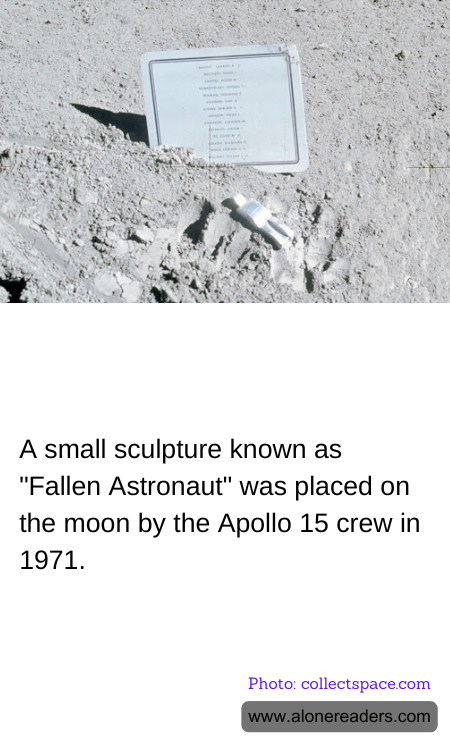
In the vast expanse of the moon's desolate surface lies a small, poignant tribute to human exploration and the sacrifices made in the pursuit of knowledge. This tribute, known as the "Fallen Astronaut," is a small sculpture placed on the lunar surface by the Apollo 15 crew in 1971. It serves as a silent testament to the courage and dedication of astronauts and cosmonauts who have ventured into the unknown, some of whom never returned.
The "Fallen Astronaut" is a simple yet powerful piece of art. Crafted by Belgian artist Paul Van Hoeydonck, the sculpture is a small aluminum figure, just 3.5 inches tall, depicting an astronaut in a spacesuit. Its minimalist design captures the essence of humanity's quest for exploration, while its placement on the moon underscores the vastness of space and the fragility of human life. The sculpture was left on the lunar surface during the Apollo 15 mission, the fourth manned mission to land on the moon, which took place from July 26 to August 7, 1971.
Alongside the sculpture, the Apollo 15 crew placed a plaque bearing the names of 14 astronauts and cosmonauts who had lost their lives in the pursuit of space exploration. This list included American astronauts such as the crew of Apollo 1—Gus Grissom, Ed White, and Roger B. Chaffee—who perished in a cabin fire during a pre-launch test, as well as Soviet cosmonauts like Yuri Gagarin, the first human in space, who died in a training accident. The inclusion of both American and Soviet names was a significant gesture during the Cold War era, highlighting the shared human endeavor of space exploration beyond political boundaries.
The decision to place the "Fallen Astronaut" on the moon was made with a deep sense of respect and reverence. The Apollo 15 astronauts, David Scott, James Irwin, and Alfred Worden, sought to honor their fallen colleagues in a manner that transcended earthly conflicts and celebrated the spirit of discovery. The sculpture and plaque were left discreetly in the Hadley-Apennine region of the moon, where they remain to this day, untouched by human hands since the mission's conclusion.
Over the years, the "Fallen Astronaut" has become a symbol of remembrance and inspiration. It reminds us of the inherent risks of space exploration and the bravery of those who dare to venture beyond our planet. It also serves as a call to future generations to continue the quest for knowledge and understanding, to push the boundaries of what is possible, and to honor the legacy of those who paved the way.
In a world where technological advancements continue to propel us further into the cosmos, the "Fallen Astronaut" stands as a humble reminder of the human spirit's resilience and the enduring quest to explore the unknown. It is a tribute not only to those who have fallen but also to the enduring hope that drives humanity to reach for the stars.
