More About This Card
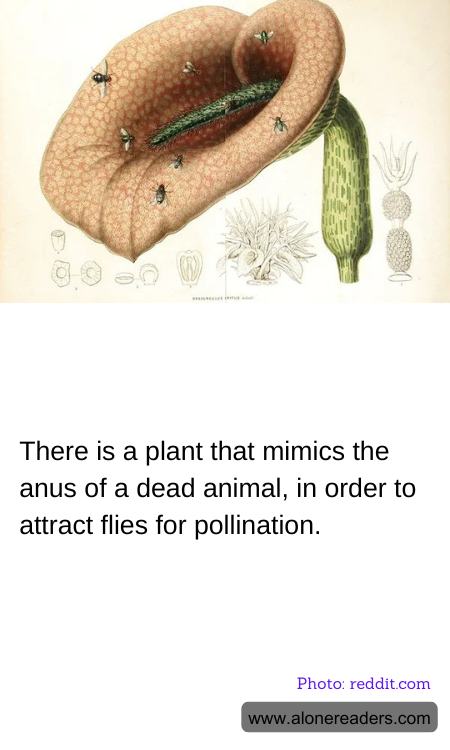
In the fascinating world of botany, nature never ceases to amaze with its ingenious adaptations and survival strategies. One such remarkable example is a plant that has evolved to mimic the appearance of a dead animal's anus to attract flies for pollination. This peculiar adaptation highlights the intricate and often surprising relationships between plants and their pollinators.
The plant in question belongs to the genus Aristolochia, commonly known as pipevine or birthwort. These plants have developed a unique strategy to ensure their reproductive success by luring in flies, which are attracted to the scent and appearance of decaying organic matter. The flowers of some Aristolochia species have evolved to resemble the rear end of a deceased animal, complete with a foul odor that mimics the smell of rotting flesh. This clever disguise is not just for show; it serves a critical purpose in the plant's life cycle.
Flies, particularly those from the family Calliphoridae, are naturally drawn to decomposing matter where they typically lay their eggs. When these unsuspecting insects encounter the Aristolochia flower, they are enticed by its convincing mimicry and enter the bloom in search of a suitable site for egg-laying. Once inside, the flies become temporarily trapped by the flower's intricate structure. During their struggle to escape, they inadvertently come into contact with the plant's reproductive organs, transferring pollen from one flower to another.
This form of deception is known as brood-site mimicry, a strategy that has evolved in various plant species to exploit the instincts of their pollinators. While it may seem like a macabre tactic, it is a testament to the lengths to which nature will go to ensure the continuation of a species. The Aristolochia's mimicry is so effective that it not only attracts flies but also ensures that they play an active role in the plant's pollination process.
The relationship between the Aristolochia plant and its fly pollinators is a prime example of coevolution, where two species influence each other's development over time. The plant's ability to mimic the appearance and scent of a dead animal is a result of millions of years of evolutionary pressure to attract the right pollinators. In turn, the flies have adapted to recognize and respond to these cues, albeit to their own detriment in this particular scenario.
This intriguing interaction between plant and pollinator underscores the complexity and diversity of life on Earth. It serves as a reminder of the delicate balance that exists in ecosystems, where even the most unusual adaptations can play a crucial role in the survival of a species. As we continue to explore and understand the natural world, the story of the Aristolochia plant and its fly pollinators offers a glimpse into the remarkable strategies that life employs to thrive in even the most unexpected ways.