More About This Card
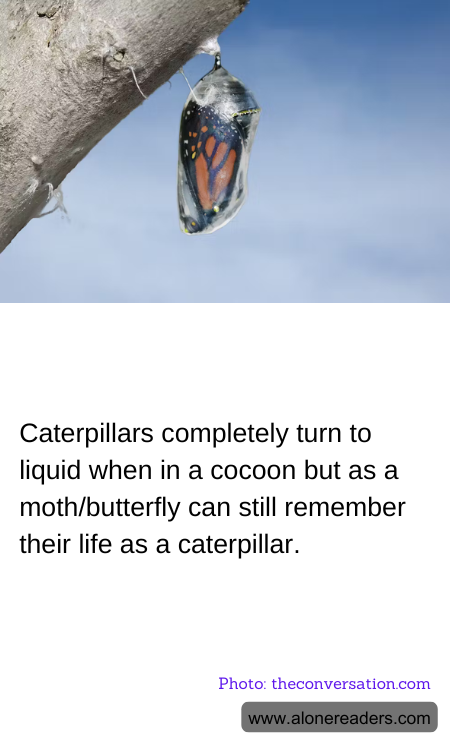
The transformation of a caterpillar into a butterfly or moth is one of nature's most fascinating processes. This metamorphosis, which occurs within the protective confines of a cocoon or chrysalis, involves a remarkable transformation that has intrigued scientists and nature enthusiasts alike. One of the most astonishing aspects of this process is that caterpillars essentially turn to liquid during their time in the cocoon, yet emerge as fully formed butterflies or moths with the ability to remember experiences from their caterpillar days.
When a caterpillar enters its pupal stage, it undergoes a process called histolysis, where its tissues break down into a soup-like substance. This might sound like the end for the caterpillar, but it is actually a crucial step in its transformation. Within this liquid state, specialized groups of cells known as imaginal discs begin to develop. These discs are the building blocks for the adult insect's wings, eyes, legs, and other body parts. Over time, these cells reorganize and differentiate to form the structures of the adult butterfly or moth.
Despite this dramatic transformation, research has shown that butterflies and moths can retain memories from their caterpillar stage. Studies conducted by scientists have demonstrated that moths, for example, can be trained to associate certain smells with mild electric shocks while they are still caterpillars. Remarkably, after metamorphosis, these moths continue to avoid those smells, indicating that their memories have survived the liquefaction and reformation process. This suggests that some neural structures or connections remain intact or are somehow reformed in the adult insect, allowing for the retention of learned behaviors.
The ability of these insects to remember their caterpillar experiences challenges our understanding of memory and brain function. It raises intriguing questions about how memories are stored and preserved through such a radical transformation. The exact mechanisms remain a topic of ongoing research, but it is believed that certain proteins or neural pathways may play a role in preserving these memories.
This incredible process not only highlights the complexity of biological systems but also serves as a reminder of the resilience and adaptability of life. The metamorphosis of caterpillars into butterflies and moths is a testament to nature's ingenuity, showcasing how life can undergo profound changes while maintaining continuity. For those who observe these creatures, it is a source of wonder and inspiration, illustrating the beauty and mystery of the natural world. Whether viewed through the lens of science or simply appreciated for its aesthetic marvel, the journey from caterpillar to butterfly is a captivating story of transformation and memory.