More About This Card
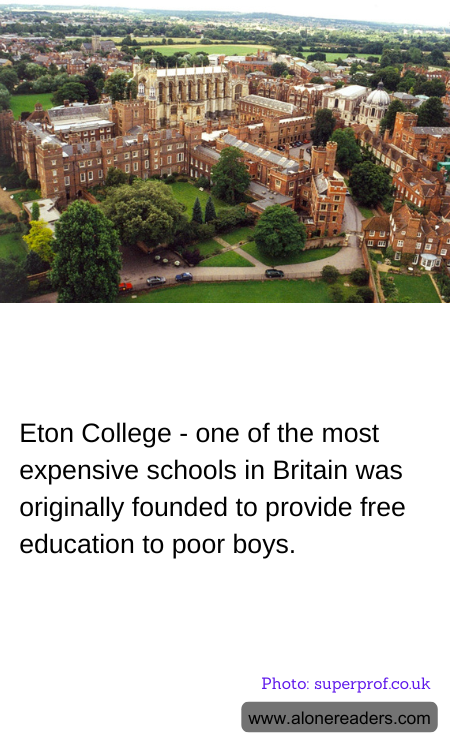
Eton College, a name synonymous with prestige and privilege, stands as one of the most expensive schools in Britain today. However, its origins tell a story of a very different mission. Founded in 1440 by King Henry VI, Eton was established with the noble intention of providing free education to seventy poor boys who would later continue their studies at King's College, Cambridge. This vision was part of a broader plan to create a pipeline of educated clergy and scholars who could serve the church and the state.
The original foundation of Eton College was deeply rooted in the medieval tradition of charity and education. During the 15th century, education was largely inaccessible to the lower classes, and institutions like Eton were rare beacons of opportunity. King Henry VI's endowment was a reflection of his desire to offer a chance for advancement to those who otherwise would have been excluded from the intellectual and spiritual life of the nation. The college was intended to be a place where merit, rather than wealth, determined one's educational prospects.
Over the centuries, Eton College evolved significantly from its humble beginnings. The school gradually shifted from its charitable roots as it began to attract the sons of the wealthy and powerful. This transformation was influenced by various factors, including changes in educational needs, societal structures, and the financial demands of maintaining such an institution. By the 19th century, Eton had firmly established itself as a leading public school, known for educating future leaders, including numerous British prime ministers and members of the royal family.
Today, Eton College is renowned for its rigorous academic standards, extensive extracurricular offerings, and its ability to prepare students for top universities worldwide. However, the cost of attending Eton has become prohibitive for many, with annual fees reaching over £40,000. Despite this, the school has made efforts to honor its original mission by offering scholarships and financial aid to talented students from less privileged backgrounds. These initiatives aim to ensure that Eton remains accessible to a diverse range of students, albeit on a much smaller scale than initially envisioned by its founder.
Eton's journey from a charitable institution to a bastion of elite education reflects broader societal changes and the complex interplay between tradition and modernity. While the school has adapted to the times, it continues to grapple with its historical legacy and the challenge of balancing exclusivity with inclusivity. As Eton looks to the future, it remains a symbol of both the enduring value of education and the ongoing quest to make that education available to all, regardless of their financial means.