More About This Card
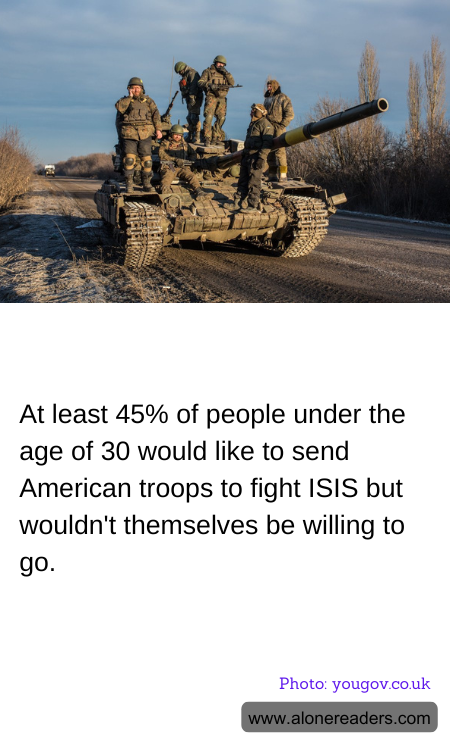
In recent years, the global threat posed by ISIS has sparked intense debate about the role of military intervention in combating terrorism. A striking statistic has emerged from this discourse: at least 45% of people under the age of 30 express support for deploying American troops to fight ISIS, yet they themselves are unwilling to enlist. This paradox highlights a complex relationship between advocacy for military action and personal commitment to service.
The willingness of young Americans to support military intervention without personal involvement may be rooted in a variety of factors. For one, the post-9/11 generation has grown up in an era where the threat of terrorism is a constant backdrop. This exposure has likely shaped their perception of global security threats and the necessity of military action. However, the reluctance to personally engage in military service may stem from a combination of fear, uncertainty about the implications of war, and a preference for alternative forms of contribution.
The disparity between support for troop deployment and personal enlistment raises important questions about civic responsibility and the nature of modern warfare. In an era where military service is voluntary, the burden of combat falls on a small segment of the population, often leading to a disconnect between the general public and the realities of military life. This gap can foster a sense of detachment, where the consequences of war are perceived as distant and abstract, rather than immediate and personal.
Moreover, the digital age has transformed the way young people engage with global issues. Social media platforms and online news outlets provide immediate access to information, allowing individuals to form opinions and advocate for causes with unprecedented speed. However, this digital engagement can sometimes lead to a superficial understanding of complex issues, where the nuances of military intervention and its human cost are overshadowed by the immediacy of online discourse.
To address this disconnect, it is crucial to foster a deeper understanding of military service and its implications among young people. Educational initiatives that emphasize the realities of military life, the ethical considerations of warfare, and the importance of informed civic engagement can help bridge the gap between advocacy and action. Encouraging dialogue between veterans and civilians can also provide valuable insights into the sacrifices and challenges faced by those who serve.
Ultimately, the willingness of young Americans to support military intervention against ISIS reflects a genuine concern for global security. However, translating this concern into meaningful action requires a nuanced understanding of the complexities of warfare and a commitment to informed, responsible citizenship. By fostering a culture of engagement and empathy, society can ensure that the call for military action is accompanied by a willingness to share in the responsibilities and sacrifices it entails.