More About This Card
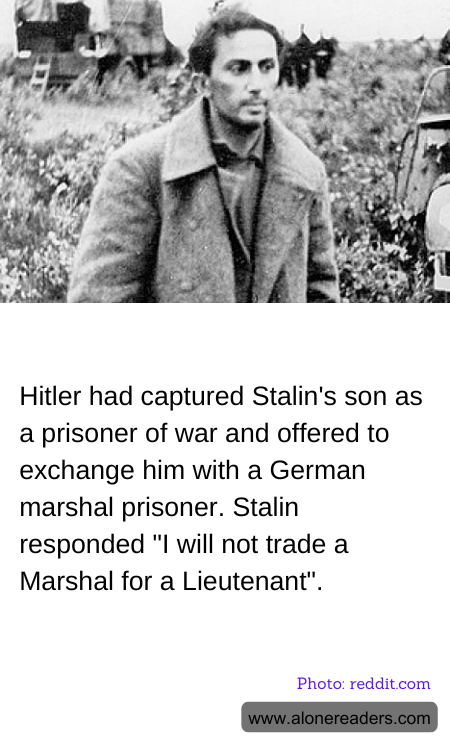
During the tumultuous years of World War II, a remarkable and poignant episode unfolded between two of the era's most formidable leaders: Adolf Hitler and Joseph Stalin. This episode involved the capture of Stalin's son, Yakov Dzhugashvili, by German forces and a subsequent exchange proposal that was as audacious as it was symbolic.
Yakov, Stalin's eldest son, was serving as a lieutenant in the Soviet Red Army when he was captured by the Germans in 1941 during the Battle of Smolensk. His capture was a significant propaganda victory for the Nazis, who sought to exploit the situation to their advantage. Hitler, recognizing the potential leverage of having Stalin's son as a prisoner, proposed an exchange: Yakov for Friedrich Paulus, a German Field Marshal captured by the Soviets after the Battle of Stalingrad.
The proposal was a strategic move by Hitler, aimed at not only retrieving a high-ranking officer but also at testing Stalin's resolve and personal values. However, Stalin's response was as cold and calculated as it was unexpected. He reportedly refused the exchange with the terse statement, "I will not trade a Marshal for a Lieutenant." This response was emblematic of Stalin's ruthless pragmatism and his unwavering commitment to the Soviet cause, even at the expense of personal ties.
Stalin's decision was rooted in his broader military and political strategy. By refusing to prioritize his son's life over that of a high-ranking Soviet officer, Stalin reinforced the message that no individual, not even his own flesh and blood, was above the collective needs of the state. This stance was consistent with his leadership style, which often placed the Soviet Union's interests above personal considerations.
The fate of Yakov Dzhugashvili remains a subject of historical debate and intrigue. He died in 1943 under mysterious circumstances in the Sachsenhausen concentration camp. Some accounts suggest he was shot while attempting to escape, while others imply he may have taken his own life. Regardless of the exact circumstances, Yakov's tragic end underscores the harsh realities of war and the personal sacrifices made by those entangled in its web.
This episode between Hitler and Stalin highlights the complex interplay of personal and political dynamics during World War II. It serves as a stark reminder of the brutal calculus of war, where even familial bonds could be overshadowed by the demands of leadership and ideology. As history continues to unravel the intricacies of this period, the story of Yakov Dzhugashvili remains a poignant testament to the human cost of conflict and the often unforgiving nature of power.