More About This Card
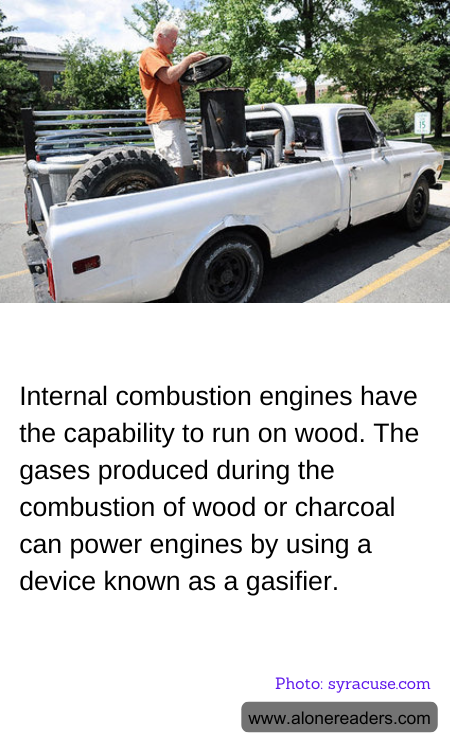
In the quest for sustainable and alternative energy sources, the concept of running internal combustion engines on wood has emerged as a fascinating and viable option. This innovative approach leverages the process of gasification, where wood or charcoal is converted into a combustible gas that can power engines. This method not only provides a renewable energy source but also offers a glimpse into a more sustainable future for transportation and machinery.
The principle behind this technology is relatively straightforward. A device known as a gasifier is used to convert solid biomass, such as wood or charcoal, into a gaseous fuel. This process involves heating the biomass in an oxygen-limited environment, which prevents it from burning completely. Instead, the heat causes the biomass to decompose and release a mixture of gases, primarily carbon monoxide, hydrogen, and methane. These gases, collectively known as syngas, can then be used to fuel internal combustion engines.
Gasification is not a new technology; it has been around since the early 20th century. During World War II, when fuel shortages were common, gasifiers were widely used to power vehicles in Europe. Today, with the growing emphasis on reducing carbon footprints and finding sustainable energy solutions, gasification is experiencing a resurgence. It offers a way to utilize locally available resources, reduce reliance on fossil fuels, and decrease greenhouse gas emissions.
One of the significant advantages of using wood gasification is its potential to utilize waste materials. Agricultural residues, forestry by-products, and even certain types of municipal waste can be used as feedstock for gasifiers. This not only helps in waste management but also provides a cost-effective fuel source. Moreover, the use of wood gasification can contribute to energy independence, particularly in rural or remote areas where access to conventional fuels may be limited.
However, there are challenges to widespread adoption. The technology requires a certain level of expertise to operate efficiently, and the initial setup costs can be high. Additionally, the quality of the syngas can vary depending on the type of biomass used, which can affect engine performance. Despite these challenges, advancements in technology and increased interest in renewable energy sources are driving improvements in gasifier design and efficiency.
In conclusion, the ability of internal combustion engines to run on wood through the process of gasification presents an exciting opportunity for sustainable energy. By harnessing the power of biomass, we can reduce our dependence on fossil fuels, manage waste more effectively, and move towards a more sustainable future. As technology continues to evolve, the potential for wood-powered engines to play a significant role in our energy landscape becomes increasingly promising.