More About This Card
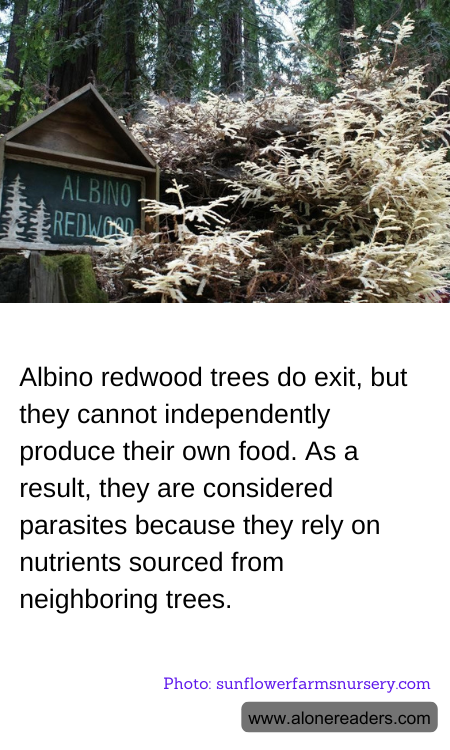
In the enchanting world of forests, where towering trees stretch towards the sky, a rare and intriguing phenomenon exists: the albino redwood tree. Unlike their verdant counterparts, these ghostly white trees stand out with their striking lack of chlorophyll, the pigment responsible for the green color in plants. This absence of chlorophyll means that albino redwoods cannot perform photosynthesis, the process by which plants convert sunlight into the energy they need to grow. As a result, these trees are unable to independently produce their own food, setting them apart in the plant kingdom.
Albino redwoods are considered botanical anomalies, and their existence raises fascinating questions about survival and adaptation. Without the ability to photosynthesize, these trees rely on a unique form of parasitism to sustain themselves. They connect to the root systems of neighboring healthy redwoods, tapping into the shared network of nutrients and water. This underground exchange allows albino redwoods to draw the sustenance they need from their green relatives, effectively making them parasites in the forest ecosystem.
The presence of albino redwoods is a testament to the complex and interconnected nature of forest life. While they may seem like a burden to their host trees, some scientists suggest that albino redwoods could play a role in the ecosystem by acting as indicators of environmental stress or changes. Their sensitivity to pollutants and other environmental factors might provide valuable insights into the health of the forest. Moreover, the study of these trees offers a glimpse into the intricate relationships that sustain life in the natural world.
Despite their parasitic nature, albino redwoods are cherished by those who encounter them. Their rarity and ethereal beauty captivate the imagination, drawing visitors and researchers alike to the few locations where they can be found. These trees challenge our understanding of survival and adaptation, reminding us of the resilience and diversity of life on Earth.
In a world where the balance of ecosystems is increasingly threatened by human activity, the albino redwood stands as a symbol of nature's complexity and fragility. Their existence prompts us to reflect on the interconnectedness of all living things and the delicate web of relationships that sustain our planet. As we continue to explore and learn from these ghostly giants, we gain not only scientific knowledge but also a deeper appreciation for the wonders of the natural world.