More About This Card
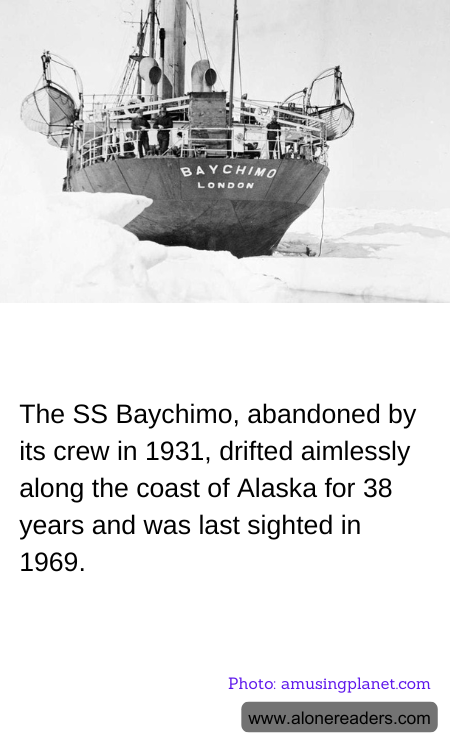
The story of the SS Baychimo is one of the most intriguing maritime mysteries of the 20th century. This steel-hulled cargo steamer, built in 1914 in Sweden, was primarily used for trading routes between Hamburg and Sweden. After World War I, the ship was acquired by the Hudson's Bay Company and repurposed to transport goods and furs between the Arctic and Vancouver. However, it is not the ship's trading history that captivates the imagination, but rather its ghostly journey after being abandoned by its crew in 1931.
In October 1931, the SS Baychimo found itself trapped in the ice off the coast of Alaska. The crew initially stayed with the ship, hoping for a thaw, but as the harsh Arctic winter set in, they were forced to abandon the vessel. They set up camp nearby, waiting for the ice to release its grip. After a few days, a severe blizzard struck, and when the storm cleared, the Baychimo had vanished. The crew assumed it had sunk, but a few days later, it was spotted adrift, some distance away. Attempts to board and salvage the ship were thwarted by the unpredictable ice conditions, and eventually, the crew was evacuated by air, leaving the Baychimo to its fate.
Remarkably, the SS Baychimo did not sink. Instead, it began a ghostly voyage, drifting aimlessly along the Alaskan coast. Over the years, it was sighted numerous times by whalers, Inuit hunters, and other ships. Each sighting added to the legend of the "Ghost Ship of the Arctic." Despite several attempts to board and salvage the vessel, the Baychimo remained elusive, often disappearing into the fog or becoming trapped in ice once more. It seemed to have a life of its own, evading capture and continuing its solitary journey.
The last confirmed sighting of the SS Baychimo was in 1969, nearly 38 years after it was abandoned. A group of Inuit reported seeing the ship trapped in ice, yet still intact. After this sighting, the Baychimo vanished from records, leaving behind a legacy of mystery and intrigue. Despite numerous searches and modern technology, the final resting place of the Baychimo remains unknown, and it has become a symbol of the unforgiving and unpredictable nature of the Arctic seas.
The tale of the SS Baychimo serves as a reminder of the power of nature and the enduring mysteries that the seas can hold. It captures the imagination of maritime enthusiasts and adventurers alike, standing as a testament to the resilience of human-made structures and the stories they can tell long after they have been left to the elements. Whether the Baychimo still drifts beneath the Arctic ice or rests on the ocean floor, its legend continues to fascinate and inspire those who hear its story.