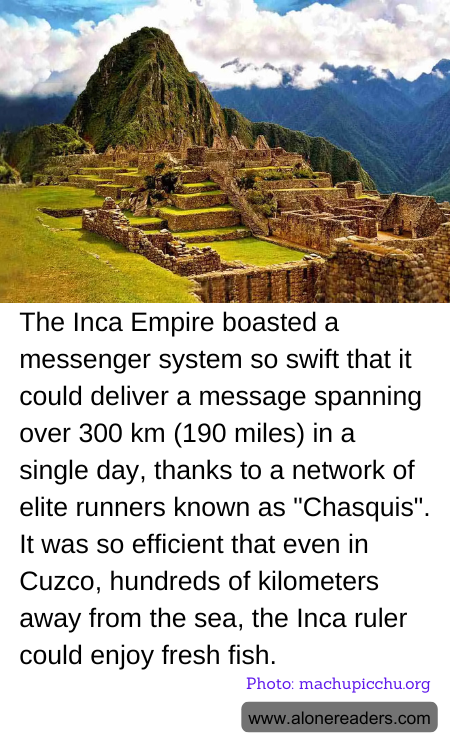
The Inca Empire, one of the most sophisticated civilizations of pre-Columbian America, was renowned for its remarkable achievements in various fields, including architecture, agriculture, and governance. Among its most impressive feats was the creation of an efficient and rapid communication system that spanned the vast expanse of its territory. This system was made possible by the Chasquis, a network of elite runners who could deliver messages and goods over great distances with astonishing speed.
The Chasquis were the backbone of the Inca communication network, tasked with relaying messages across the empire's extensive road system, known as the Qhapaq Ñan. This network stretched over 40,000 kilometers (about 25,000 miles) and connected the farthest reaches of the empire, from the arid deserts of the coast to the lush valleys of the Andes. The Chasquis operated in a relay system, with each runner covering a segment of the route before passing the message to the next runner at designated relay stations, known as tambos. This system allowed for messages to be transmitted over 300 kilometers (190 miles) in a single day, a feat that was unmatched in the ancient world.
The efficiency of the Chasquis was not only a testament to their physical endurance and skill but also to the organizational prowess of the Inca administration. The runners were trained from a young age, selected for their speed and stamina, and were highly respected within Inca society. Their role was crucial in maintaining the cohesion and control of the vast empire, enabling the rapid dissemination of information, orders, and even goods.
One of the most remarkable anecdotes illustrating the effectiveness of the Chasquis system is the delivery of fresh fish to the Inca ruler in Cuzco, the empire's capital, which was located hundreds of kilometers away from the sea. This feat was achieved by a relay of Chasquis who transported the fish from the coast to the highlands, ensuring that it arrived fresh and fit for consumption. This not only highlights the speed of the Chasquis but also the logistical capabilities of the Inca administration in coordinating such a complex operation.
The legacy of the Chasquis and the Inca communication system is a testament to the ingenuity and resourcefulness of the Inca civilization. It underscores the importance of effective communication in the administration and cohesion of large empires, a lesson that remains relevant even in today's digital age. The Chasquis were more than just messengers; they were vital links in the chain that held the Inca Empire together, ensuring that its rulers could govern effectively and that its people remained connected across vast distances.
