More About This Card
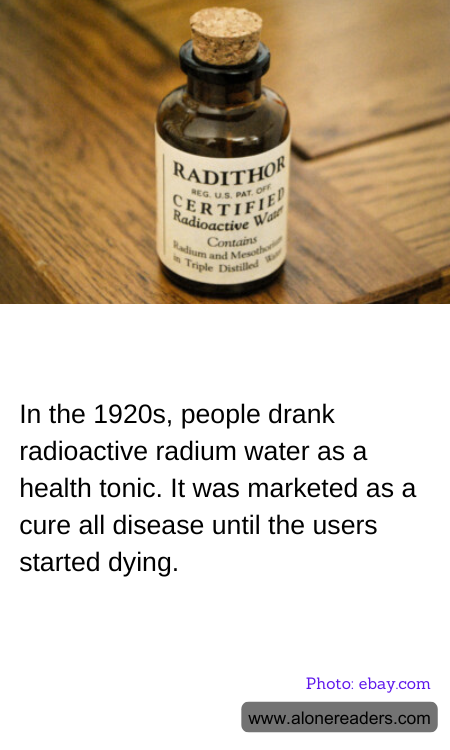
In the 1920s, a peculiar health trend swept across the United States, captivating the public's imagination with promises of vitality and wellness. This trend was the consumption of radium-infused water, marketed as a miraculous health tonic. At the time, radium was a relatively new discovery, and its luminescent properties fascinated both scientists and the general public. The element was hailed as a wonder of modern science, and its potential seemed limitless. Entrepreneurs quickly seized the opportunity to capitalize on this fascination, promoting radium water as a cure-all for a myriad of ailments.
Radium water was sold under various brand names, with Radithor being one of the most popular. It was marketed as a rejuvenating elixir that could boost energy, enhance mental clarity, and even extend life. Advertisements claimed that radium water could cure everything from arthritis to impotence, and its popularity soared. The public, eager for a quick fix to their health woes, embraced the product with open arms. Little did they know, the very substance they believed would heal them was slowly poisoning their bodies.
The dangers of radium were not immediately apparent. Initially, consumers reported feeling invigorated after drinking the tonic, attributing their newfound energy to the miraculous properties of radium. However, the effects were short-lived, and the long-term consequences were devastating. Radium is a radioactive element, and prolonged exposure can lead to severe health issues, including bone fractures, anemia, and cancer. As time passed, the grim reality of radium's effects began to surface. Users of radium water started experiencing severe health problems, and some even died as a result of radiation poisoning.
One of the most infamous cases was that of Eben Byers, a wealthy industrialist who became a fervent advocate of Radithor. Byers consumed large quantities of the tonic, believing it to be the secret to his robust health. Tragically, his health deteriorated rapidly, and he suffered from severe bone decay and other radiation-induced ailments. Byers' death in 1932 was a turning point, drawing public attention to the dangers of radium consumption. His demise was widely publicized, leading to increased scrutiny of radium products and eventually resulting in stricter regulations.
The radium water craze serves as a cautionary tale about the perils of unregulated health products and the importance of scientific scrutiny. It highlights the need for skepticism and critical thinking when evaluating health claims, especially those that seem too good to be true. The tragic consequences of radium water consumption remind us that not all that glitters is gold, and that the pursuit of health should always be grounded in evidence-based practices. As we look back on this dark chapter in medical history, we are reminded of the vital role that science and regulation play in protecting public health.