More About This Card
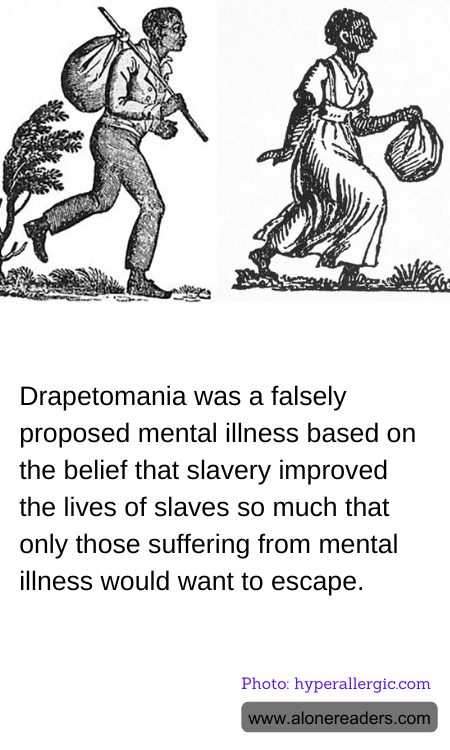
In the mid-19th century, a disturbing concept emerged within the realm of pseudoscience: drapetomania. This term was coined by American physician Samuel A. Cartwright in 1851, who proposed it as a mental illness that supposedly afflicted enslaved Africans. According to Cartwright, drapetomania was characterized by an inexplicable urge to escape from slavery, a condition he believed was pathological because he viewed slavery as beneficial to the enslaved individuals.
Cartwright's theory was rooted in the deeply flawed and racist ideology that slavery was a civilizing force, improving the lives of those subjected to it. He argued that enslaved people who attempted to flee were not acting out of a natural desire for freedom, but rather were suffering from a mental disorder. This notion was used to justify the brutal system of slavery, suggesting that any dissatisfaction or desire for autonomy among enslaved people was not a legitimate response to their oppression, but rather a sign of mental instability.
The concept of drapetomania is now widely recognized as a pseudoscientific justification for the inhumane treatment of enslaved people. It reflects the lengths to which proponents of slavery went to rationalize and perpetuate the institution. By pathologizing the natural human desire for freedom, Cartwright and others sought to delegitimize the experiences and agency of enslaved individuals, framing their resistance as irrational rather than a courageous stand against injustice.
This false diagnosis also highlights the broader historical misuse of medical and scientific authority to uphold oppressive systems. Drapetomania was never based on empirical evidence or scientific rigor; instead, it was a product of the racist ideologies of its time. It served as a tool to dehumanize enslaved people and deny them their basic human rights, reinforcing the power dynamics that kept slavery in place.
Today, drapetomania is a stark reminder of the dangers of pseudoscience and the importance of critically examining the motivations behind scientific claims. It underscores the need for vigilance in ensuring that science and medicine are used to promote justice and equality, rather than to justify discrimination and oppression. As we reflect on this dark chapter in history, it is crucial to recognize the resilience and strength of those who resisted slavery, challenging the false narratives imposed upon them and asserting their right to freedom and dignity.