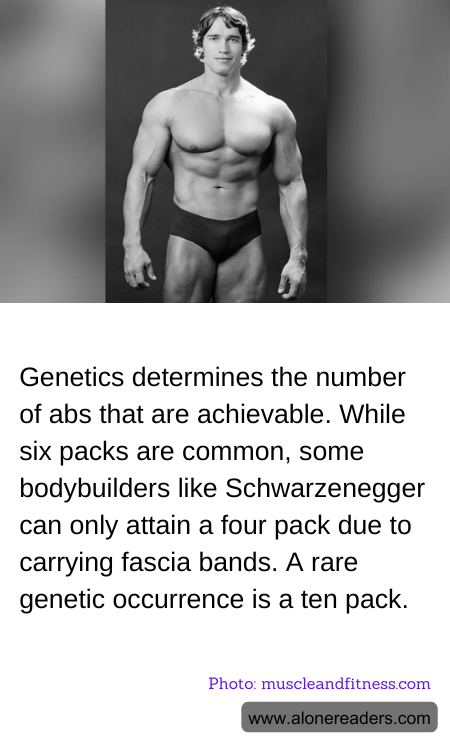
When it comes to the pursuit of a chiseled physique, the coveted six-pack abs often stand as the ultimate symbol of fitness and dedication. However, the number of abdominal muscles that can be visibly achieved is not solely a result of diet and exercise; genetics play a crucial role in determining the potential layout of one's abs. While six-pack abs are commonly seen, some individuals, including renowned bodybuilder Arnold Schwarzenegger, can only attain a four-pack due to the presence of fascia bands.
Fascia bands are connective tissues that run horizontally across the abdominal muscles. These bands can segment the rectus abdominis, the muscle responsible for the appearance of abs, into different configurations. For most people, the rectus abdominis is divided into three horizontal sections, resulting in the classic six-pack look. However, in some individuals, the fascia bands are arranged in such a way that only two sections are prominent, leading to a four-pack appearance. This is not a reflection of one's fitness level or effort but rather a genetic predisposition that dictates the muscle's structure.
Interestingly, there are rare cases where individuals possess a ten-pack. This unique genetic occurrence is due to additional fascia bands that create more segments in the rectus abdominis. While a ten-pack is an extraordinary sight, it is important to note that it does not necessarily indicate superior strength or fitness compared to those with fewer visible segments. The number of abdominal segments is purely a matter of genetic lottery, and each configuration has its own aesthetic appeal.
Understanding the genetic factors behind abdominal muscle configuration can help dispel common myths about fitness and body image. It is crucial for individuals to recognize that the number of visible abs does not define one's health or athletic ability. Instead, focusing on overall fitness, strength, and well-being should be the primary goal. Embracing one's unique genetic makeup can lead to a healthier relationship with body image and personal fitness goals.
In conclusion, while six-pack abs are often seen as the pinnacle of abdominal aesthetics, the reality is that genetics largely determine the number of abs one can achieve. Whether it's a four-pack, six-pack, or the rare ten-pack, each configuration is a testament to the diversity of human genetics. By understanding and accepting these genetic influences, individuals can focus on achieving their personal best, celebrating their unique bodies, and promoting a more inclusive view of fitness.
