More About This Card
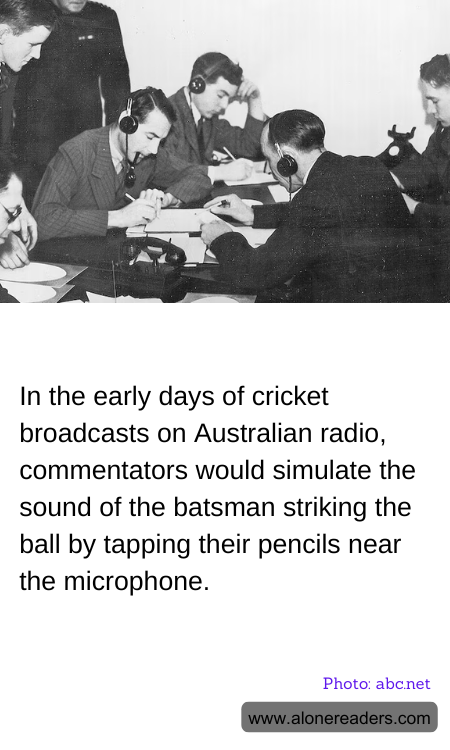
In the early days of cricket broadcasts on Australian radio, the art of storytelling took on a unique auditory dimension. Long before the advent of live television broadcasts and digital streaming, cricket enthusiasts relied on radio to follow the game. However, the technology of the time presented significant challenges. With no live audio feed from the cricket grounds, commentators had to rely on their creativity and ingenuity to bring the game to life for their listeners. One of the most fascinating techniques they employed was simulating the sound of the batsman striking the ball by tapping their pencils near the microphone.
This inventive approach was born out of necessity. During the 1930s and 1940s, radio broadcasts were often relayed from overseas, with commentators receiving only telegraphic updates of the match. These updates were sparse and lacked the vivid detail that cricket fans craved. To bridge this gap, commentators would craft a narrative around the sparse information they received, painting a picture of the match with their words. The pencil tap became an essential tool in their arsenal, adding an auditory cue that helped listeners imagine the action unfolding on the field.
The pencil tap was more than just a sound effect; it was a symbol of the commentator's role as a storyteller. It required skill and timing to match the rhythm of the game, creating an illusion of immediacy and excitement. Listeners would sit by their radios, hanging on every word and sound, as the commentators described the players' movements, the crowd's reactions, and the tension of the match. The pencil tap, though simple, was a powerful device that connected the audience to the game, making them feel as though they were right there in the stands.
This era of radio commentary is a testament to the creativity and resourcefulness of early broadcasters. It highlights the lengths to which they went to engage their audience and bring the game to life, despite the technological limitations of the time. The pencil tap is a reminder of a bygone era, where imagination and innovation were key to delivering an immersive experience.
Today, as we enjoy high-definition broadcasts and real-time updates, it's easy to forget the humble beginnings of cricket commentary. Yet, the legacy of those early broadcasters lives on, reminding us of the power of storytelling and the enduring appeal of cricket. The pencil tap may have been a simple trick, but it played a crucial role in shaping the way the game was experienced by generations of fans. It stands as a charming footnote in the history of cricket, a testament to the ingenuity of those who brought the game to life through the airwaves.